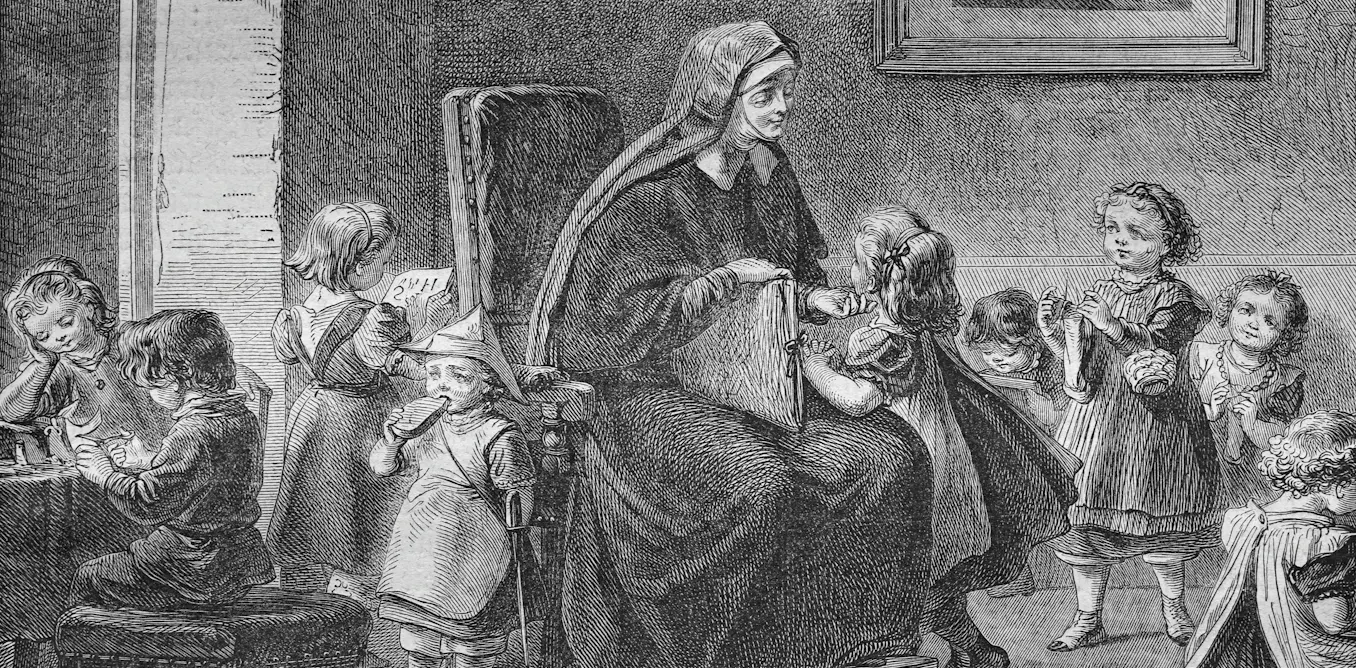
# How radical Victorian nuns pioneered education for poor girls
Catholic nuns in Victorian England defied social convention by establishing schools that gave poor girls access to rigorous academic education. These institutions directly challenged the prevailing belief that women belonged primarily in domestic roles.
The nuns operated against entrenched class and gender barriers. Victorian society expected working-class girls to enter domestic service or factory work, not pursue formal learning. Yet religious communities, particularly the Sisters of Mercy and Ursulines, opened schools across industrial cities where they taught literacy, numeracy, and practical skills alongside religious instruction.
These schools served a vital function in underserved communities. Factory towns and poor urban neighborhoods had minimal educational infrastructure for girls. Convent schools filled that gap, offering tuition-free or low-cost education to children whose families could not afford private schooling.
The curriculum reflected ambitious goals. Beyond basic reading and writing, girls studied history, geography, and languages. Some schools added vocational training in needlework and laundry work, but framed these skills within a broader educational context rather than as their sole purpose.
The nuns themselves faced significant obstacles. They operated with limited funding, often relying on donations and their own labor. Many teaching sisters had limited formal training, yet they innovated pedagogical methods adapted to their students' needs and circumstances.
These schools produced tangible outcomes. Educated poor girls entered the workforce with marketable skills, some became teachers themselves, and others gained literacy that transformed their families' prospects across generations.
The legacy extends beyond Victorian England. Convent schools for poor girls proliferated in Ireland, America, and other English-speaking nations where Catholic communities established roots. This network of female-led educational institutions became one of the largest non-governmental education systems of the era.
The work of these nuns challenges simplistic narratives about Victorian women's roles and demonstrates how institutional change emerged from