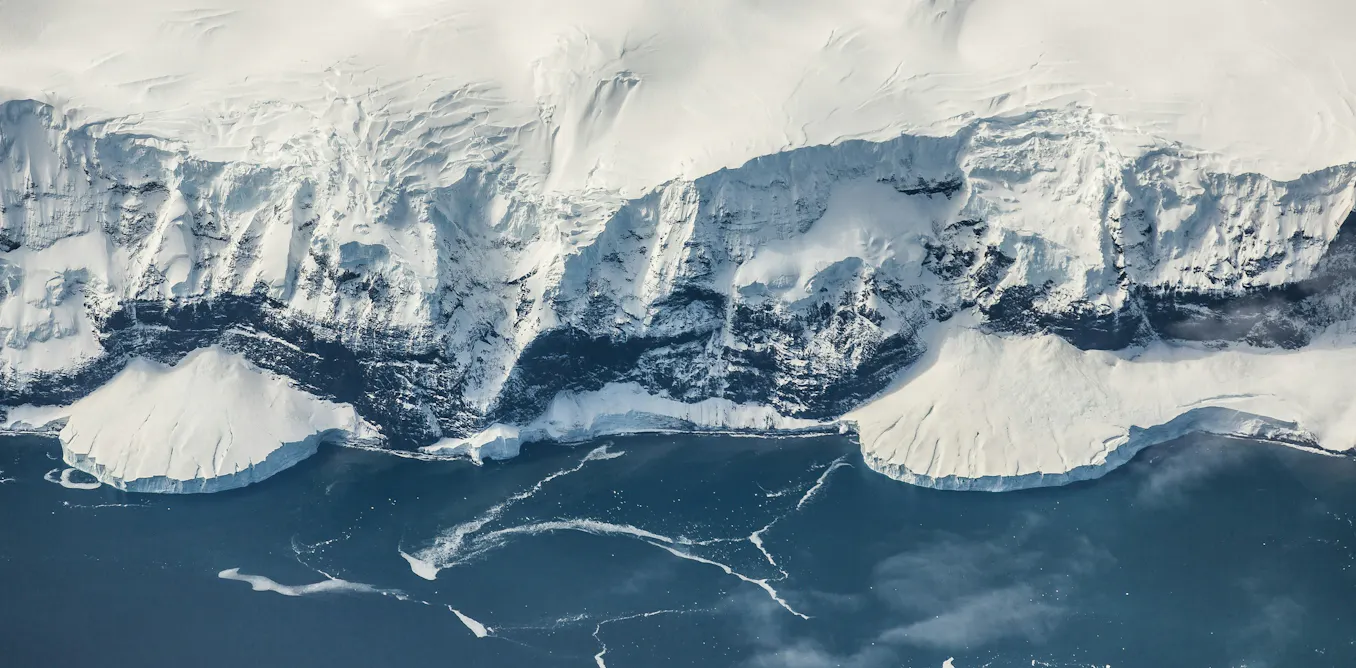
# Antarctica Froze Millions of Years Before the Arctic. Here's Why.
Antarctica developed its massive ice sheet roughly 34 million years ago, far earlier than the Arctic froze over. New research explains this puzzle by identifying two separate mechanisms that triggered Antarctic glaciation while leaving the Arctic ice-free for millions of additional years.
The Antarctic ice sheet formed during the Eocene-Oligocene transition, a period when atmospheric carbon dioxide dropped significantly. This cooling event created conditions cold enough for ice to accumulate across Antarctica's continent. The Arctic, by contrast, remained ice-free until roughly 3 to 4 million years ago, despite similar global temperature declines.
The timing difference stems from geography and ocean circulation patterns. Antarctica sits isolated at the South Pole, surrounded by the Southern Ocean. This geographic isolation meant cold air masses could persist over the continent year-round, allowing ice to build up and remain stable. The Arctic occupies a different position, surrounded by relatively warm ocean waters and connected to lower-latitude regions through atmospheric circulation patterns that transported heat northward.
Additional factors included the configuration of ocean currents and sea ice formation. The Southern Ocean's circulation around Antarctica helped insulate the continent and prevented warmer water from reaching its coasts. The Arctic's connections to Atlantic and Pacific waters meant it received more heat transport from lower latitudes, delaying widespread glaciation.
Research on ancient climate records, ice cores, and ocean sediments has provided evidence for these mechanisms. Scientists examined proxy data spanning tens of millions of years to reconstruct past atmospheric conditions and ice sheet behavior.
This research carries implications for understanding modern climate systems. As current Arctic ice diminishes faster than Antarctic ice, understanding these historical patterns helps scientists model future ice sheet behavior and predict sea level changes. The findings demonstrate that even small differences in geography and ocean circulation can produce vastly different climate outcomes across polar regions.