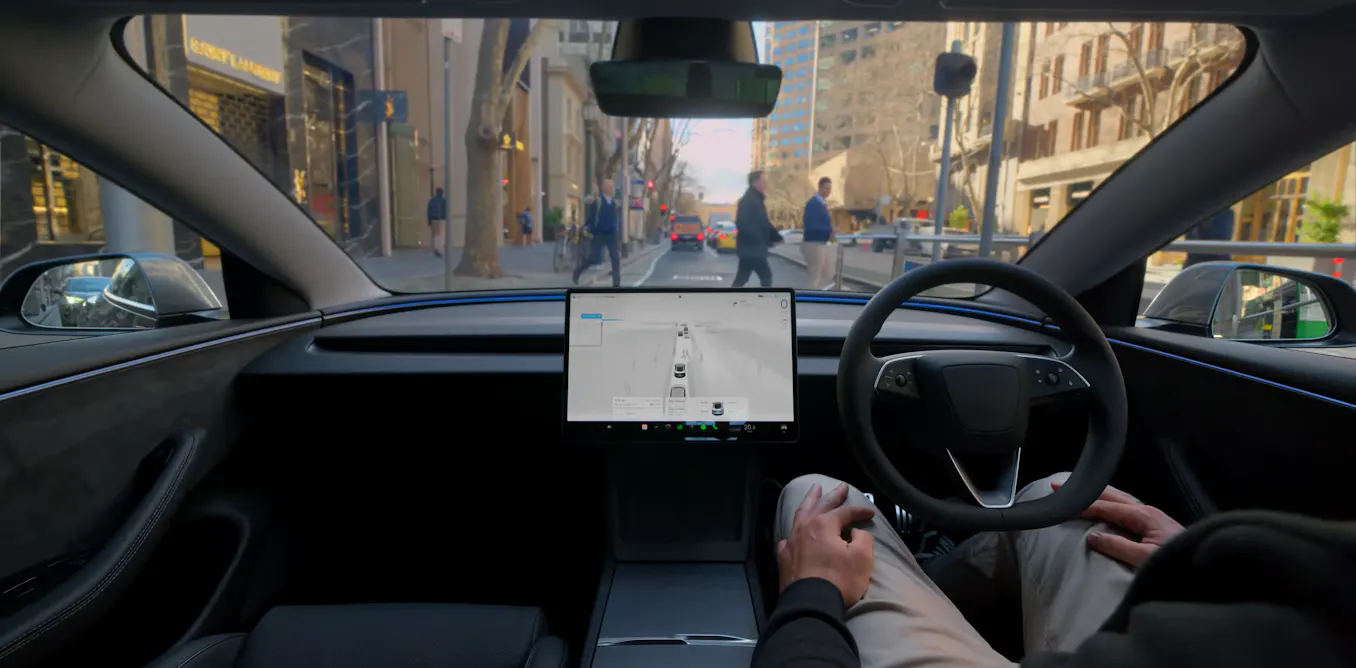
Researchers conducted a 100-day real-world test of a self-driving car to document its performance and failure patterns. The study reveals that autonomous vehicles operate with greater competence than public perception suggests, yet expose critical gaps in how they interpret road conditions and driver intent.
The vehicle demonstrated consistent challenges in specific scenarios. It struggled with unmarked intersections, failed to anticipate behavior at construction zones, and misread situations where human drivers rely on informal communication like eye contact or hand signals. Roundabouts posed particular difficulty. The car also hesitated during merge situations and showed weakness in heavy rain and snow conditions where road markings become obscured.
Crucially, the researchers found that many autonomous vehicle errors stem not from technology limitations but from infrastructure misalignment. Roads designed for human drivers contain ambiguities that confuse machine vision systems. Faded lane markings, missing curb markings, and inconsistent signage all contribute to navigation failures.
The study proposes practical infrastructure modifications that could accelerate autonomous vehicle deployment. Clear, uniform road markings and standardized signage reduce computational load on vehicles. Better-lit intersections and improved pavement contrasts help vision systems operate more reliably. Explicit signage at construction zones and unmarked intersections provides the clarity autonomous systems require.
The findings suggest that vehicle autonomy and road safety improvements operate in tandem rather than isolation. Rather than waiting for perfect autonomous technology, transportation agencies can implement low-cost infrastructure upgrades that benefit both self-driving cars and human drivers. Standardized marking systems, improved lighting, and clearer signage enhance safety across all vehicle types.
This research reframes the autonomous vehicle debate. Success does not require choosing between human drivers and robots. Instead, it requires recognizing that infrastructure shapes how all road users interpret their environment. The 100-day test demonstrates that targeted road improvements represent a faster path to widespread autonomous vehicle adoption than technological