# The Future Researcher in Every Fifth Grader
A Massachusetts teacher with 26 years in the classroom has built a teaching model centered on inquiry and curiosity rather than rote memorization or test prep. The approach treats elementary students as active researchers who ask questions, challenge ideas, and engage with material beyond textbook answers.
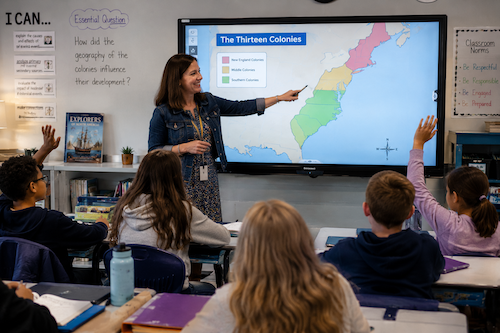
The teacher structures lessons around student-generated questions and debates. Fifth graders argue about historical events, wonder about causation, and take learning home as ongoing investigation rather than completed assignments. This method shifts the classroom dynamic from teacher-as-authority to teacher-as-guide who scaffolds student thinking.
Research supports inquiry-based learning. Studies show students retain information longer when they discover answers through questioning rather than passive reception. The approach builds critical thinking skills that transfer across subjects and into adult problem-solving. Students develop intrinsic motivation because they pursue questions that matter to them, not just test content.
The model challenges conventional practice. Many schools still prioritize test scores and standardized curricula over curiosity. Time constraints, standardized testing pressure, and teacher workload create barriers to inquiry-based instruction. Yet this Massachusetts educator demonstrates the feasibility within existing systems.
Implementation requires teacher training and mindset shifts. Educators must tolerate classroom discussions that meander, embrace student confusion as productive struggle, and grade participation differently than traditional assessments measure. Parent communication helps families understand that debate and wondering signal learning, not classroom chaos.
Fifth graders are developmentally ready for this work. They can form hypotheses, gather evidence, and revise thinking based on new information. The window to cultivate researcher habits and intellectual curiosity closes if schools focus exclusively on content delivery.
This approach does not abandon standards or rigor. Instead, it repositions how students encounter content. By positioning every student as a potential researcher, teachers unlock engagement that standardized instruction often misses.