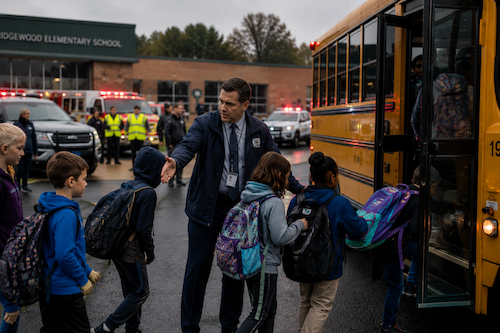
A school district's comprehensive safety plan moved from theory to practice, demonstrating how organized protocols protect both staff and students during real crises.
The distinction matters. While policymakers and external observers sometimes view school safety planning as a bureaucratic checklist, educators operating within buildings know the difference between having a plan on paper and executing one under pressure.
Comprehensive safety planning typically includes multiple layers. Districts establish clear communication chains, conduct regular drills that familiarize students and staff with evacuation routes and shelter procedures, maintain relationships with local law enforcement, and designate specific roles for administrators, teachers, and support staff during emergencies. Threat assessment teams identify warning signs before incidents occur. Emergency operations centers allow administrators to coordinate response while maintaining oversight of building operations.
The effectiveness of these systems rests on preparation. When schools conduct monthly fire drills, quarterly lockdown drills, and annual full-scale exercises, staff members internalize procedures rather than fumbling through unfamiliar steps when stress levels peak. Teachers learn exactly where to move students. Administrators know communication protocols. Custodians understand their roles in securing buildings.
Training extends beyond drills. Many districts now require de-escalation training for teachers, mental health first aid certification for staff, and trauma-informed response protocols. Some schools employ full-time safety coordinators who audit buildings for physical vulnerabilities, manage visitor screening systems, and oversee camera networks.
Physical infrastructure also factors into comprehensive planning. Single-entry systems, door locks that function from inside classrooms, intercoms that reach all areas, and secured vestibules create barriers without turning schools into fortresses. Many districts upgraded these features following incidents at other schools.
The human element remains central. Teachers and staff recognize behavioral warning signs and report concerns through established channels. School counselors and social workers follow up on threats or concerning statements. Parents communicate information about students experiencing crises. This web of observation and communication often