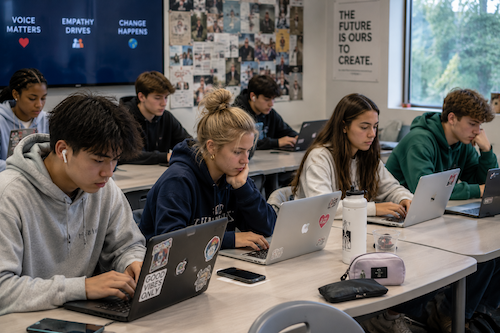
Generation Z students hold surprisingly optimistic views about artificial intelligence despite widespread public concerns about job displacement and educational integrity, according to new survey data on student career expectations.
The research, which ranks Gen Z's top 100 dream colleges and preferred employers, reveals that young people view AI as a tool to enhance rather than replace their careers. This outlook contrasts sharply with older generations' anxiety about automation eliminating jobs and with educators' concerns about AI-assisted cheating in schools.
Gen Z students demonstrate pragmatism about their future workforce. They recognize that AI skills will matter in competitive job markets. Rather than fearing the technology, most students surveyed expressed interest in learning how to work alongside AI systems. This reflects their formative experience growing up with digital tools and algorithms shaping their information environment.
The optimism extends to college and career selection. When choosing institutions and employers, Gen Z factors in organizational approaches to AI integration and workforce training. Schools and companies demonstrating thoughtful AI adoption and skill development programs rank higher in student preference surveys.
However, the data also captures real concerns. Students worry about fairness in hiring, bias built into AI systems, and whether their education adequately prepares them for AI-augmented workplaces. The gap between student optimism and these specific anxieties suggests young people differentiate between abstract AI advancement and concrete workplace impacts on their own opportunities.
Career counselors and educators note that Gen Z's optimistic stance creates both opportunity and responsibility. Schools can harness student confidence to teach responsible AI literacy and critical evaluation of algorithmic systems. Employers seeking Gen Z talent increasingly highlight their commitment to transparent AI use and worker upskilling.
The survey underscores a generational shift. While policymakers debate AI regulation and media coverage emphasizes disruption risks, the students entering the workforce view AI as a problem to solve through education and intentional integration rather than a threat to resist.
CATEGORY