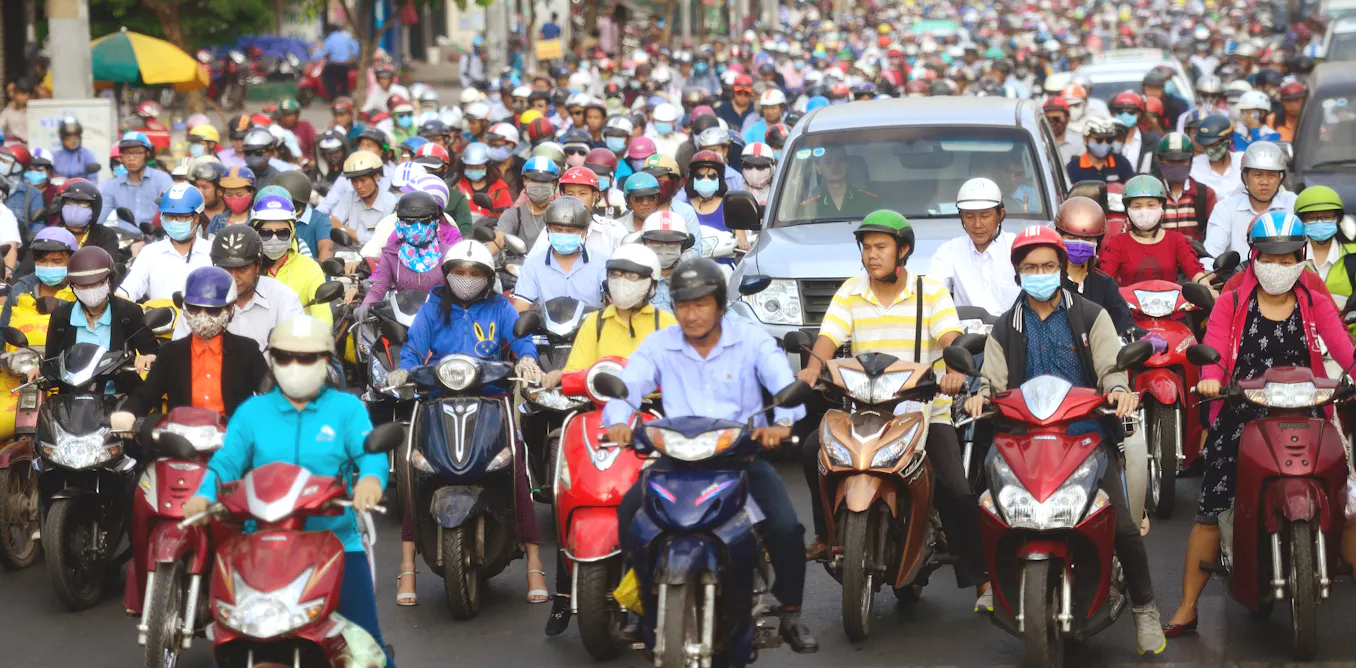
Vietnam's population has reached 100 million people, marking a major demographic threshold for the Southeast Asian nation. The country's growth trajectory now faces a sharp reversal, with projections showing slower expansion in coming decades and actual population decline by the second half of the century.
This shift reflects patterns seen across East Asia. Vietnam's fertility rate has dropped significantly as urbanization accelerates, education levels rise, and more women participate in the workforce. The average Vietnamese woman now has fewer children than previous generations, a change driven by both economic development and shifting social priorities.
Demographers point to several converging factors. Access to education and contraception has expanded substantially. Urban migration pulls people away from agricultural communities where larger families historically held economic value. Rising costs of living, particularly housing and childcare in cities, make smaller families more economically rational for parents.
The timing matters for policymakers. Vietnam currently enjoys a "demographic dividend" with a large working-age population relative to dependents. This window typically lasts 20 to 30 years, during which countries can capitalize on labor advantages and drive economic growth if they invest wisely in education and job creation.
But the eventual decline poses long-term challenges. An aging population will strain healthcare and pension systems. Fewer working-age citizens will support retirees. Labor shortages could slow economic growth. Countries like Japan and South Korea have already confronted these pressures, offering cautionary examples for Vietnam's planning.
The 100 million milestone arrives as Vietnam attempts to balance growth with sustainability. The government faces decisions about immigration policy, retirement system reform, and investments in automation. Educational institutions must prepare for a smaller cohort of young people entering the workforce, while simultaneously ensuring quality training for a knowledge-based economy.
Vietnam's demographic story reflects a global trend. Nations that achieve economic development typically see population growth slow naturally. The challenge lies not in the slowdown itself, but in