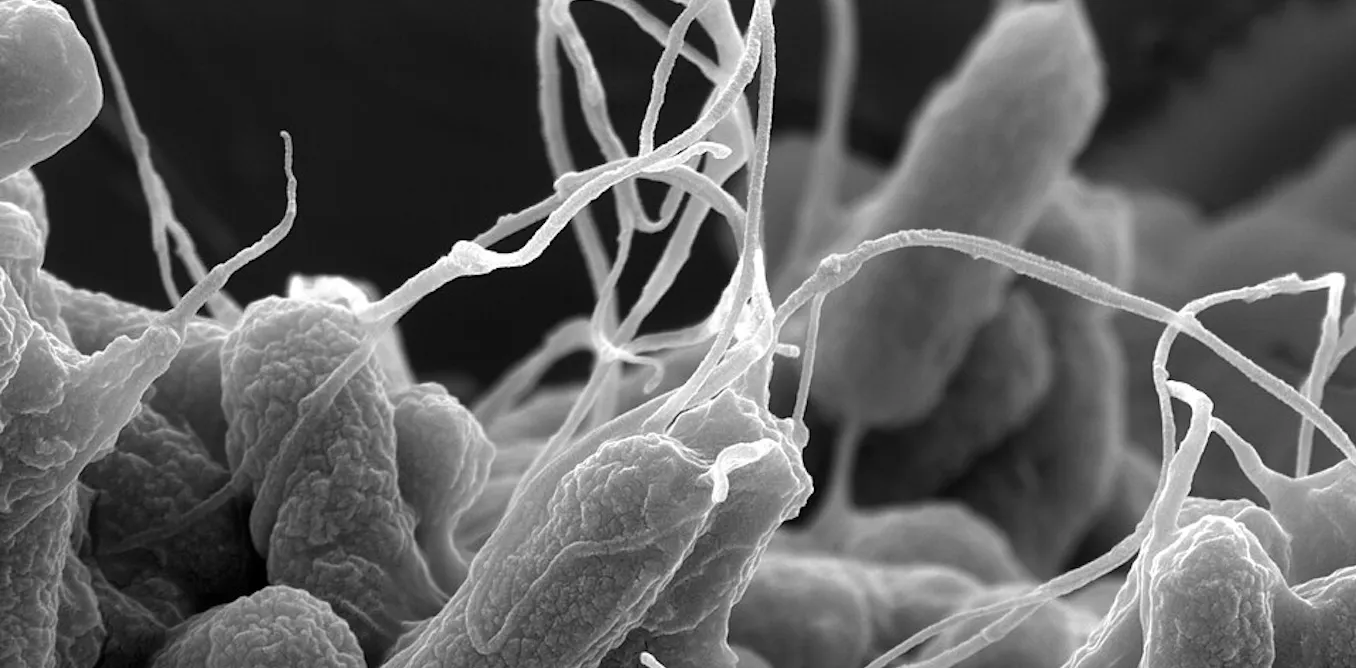
Researchers are combining generative artificial intelligence with physics-based computer simulations to engineer new peptides capable of eliminating drug-resistant bacteria. This hybrid approach addresses a growing public health crisis: antibiotic-resistant infections kill approximately 1.3 million people annually worldwide, according to the World Health Organization.
The method works by using AI to generate candidate peptide sequences, then validating them through physics simulations that predict how these molecules will behave in biological systems. Rather than relying solely on trial-and-error laboratory testing, this computational approach accelerates the discovery process dramatically. Physics simulations model molecular interactions at atomic scales, revealing whether a peptide will actually bind to bacterial cell membranes and cause them to rupture.
Generative AI excels at exploring vast chemical spaces. Traditional drug discovery methods test thousands of compounds in labs over years. AI models trained on existing peptide data can propose novel sequences in days, filtering out biologically implausible options before expensive experiments begin.
The combination tackles two weaknesses of each tool alone. AI-generated peptides sometimes violate physical laws or produce unstable structures. Physics simulations alone demand computational resources that make screening millions of candidates impractical. Together, they create a feedback loop: AI proposes candidates, physics validates feasibility, and successful structures inform the next round of AI design.
This research responds to a documented threat. Bacteria develop resistance to current antibiotics at accelerating rates. Methicillin-resistant Staphylococcus aureus (MRSA) and carbapenem-resistant Enterobacteriaceae now resist multiple classes of drugs. Developing new antibiotics typically takes 10-15 years and costs over $1 billion. Faster design methods could narrow this timeline substantially.
The approach also offers economic advantages for pharmaceutical development. Peptides are smaller and often easier to manufacture than traditional small-molecule