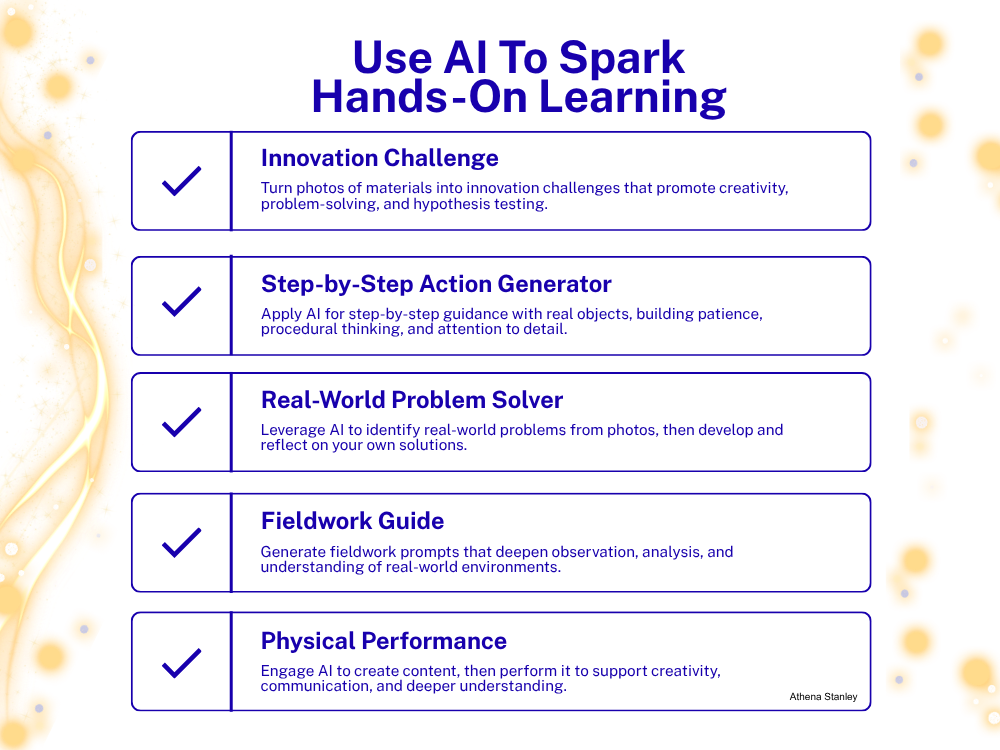
Artificial intelligence tools offer K-12 teachers concrete methods to connect digital learning with physical classroom and community engagement. One approach involves students photographing their immediate surroundings, then using AI to identify problems in those environments without receiving ready-made solutions. This method pushes students beyond passive consumption of technology toward active problem-finding in real spaces.
The strategy works across grade levels and subjects. A middle school student might photograph a crowded hallway and ask AI to identify traffic flow issues. A high school environmental science class could document local waterways and use AI to spot potential pollution sources. Elementary students can photograph playground areas and discuss safety concerns AI identifies, then brainstorm their own fixes.
This approach combines several learning benefits. Students develop observation skills by deliberately studying their physical world. They practice critical thinking by questioning AI's analysis rather than accepting it as fact. The photograph requirement anchors learning to concrete experience rather than abstract theory. When students then design solutions themselves, they own the problem-solving process.
Teachers implementing this method report increased student engagement. The transition from screen work to hands-on investigation feels purposeful rather than random. Students see immediate relevance when analyzing spaces they actually inhabit. AI becomes a thinking partner rather than an answer machine.
The five-step framework TeachThought outlines extends beyond problem identification. Students photograph, prompt AI, analyze responses, investigate deeper, and design interventions. Each stage builds agency. By withholding solutions, AI avoids the pitfall of replacing student thinking with technology-generated answers.
This model addresses a persistent classroom challenge. Too often, AI in education becomes a shortcut tool that reduces student effort. This framework inverts that dynamic. Technology enables deeper investigation of the real world. Students spend more time thinking, observing, and creating than they would in traditional lessons.
Implementation requires minimal technology infrastructure. A smartphone camera and free AI tool like ChatGPT or Google Lens suff