A high school teacher argues that artificial intelligence feedback cannot replace the human connection students need to thrive academically and emotionally.
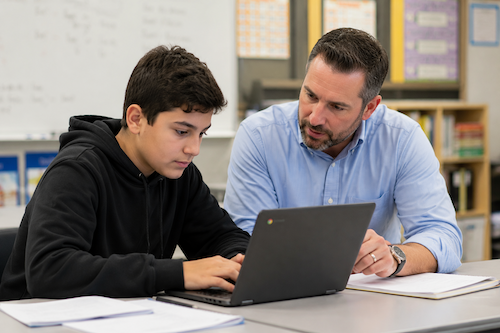
The teacher describes a conversation with a student named Steven who struggled with his final project. During their face-to-face conference, the teacher observed Steven's body language, heard the hesitation in his voice, and understood the real obstacles blocking his progress. Those details revealed context no algorithm could extract from submitted work alone.
The core tension is clear. Schools increasingly deploy AI tools to grade assignments, provide instant feedback, and identify struggling students. These systems operate at scale and reduce teacher workload. But they operate blind to what happens in actual classrooms. An AI system cannot sense when a student needs encouragement rather than criticism. It cannot detect shame or confusion in a student's expression. It cannot adjust its tone based on what a particular learner needs to hear that day.
The teacher emphasizes that feedback serves two purposes. First, it tells students what to improve. Second, it tells students that someone cares enough to look closely at their work. When an algorithm delivers the first without the second, something essential breaks.
Real feedback happens in dialogue. A teacher asks follow-up questions. A student explains their thinking. The teacher learns whether the student misunderstood the assignment, lacked resources, or simply needed more time. That conversation changes what the teacher says next. It transforms feedback from diagnosis into relationship.
This does not mean rejecting AI entirely. Technology can handle routine tasks like initial assignment collection and basic scoring. But critical moments. The conferences. The one-on-one conversations where students reveal what they actually need. Those require a human who has studied their work, sits across from them, and responds to who they are.
Schools face real pressure to do more with less. AI tempts administrators with efficiency gains. But teachers know that students do not learn from efficient feedback. They learn from being seen and challenged