# Finding the "Low Way": Reclaiming Creativity in Schools
Schools face mounting pressure to raise test scores and meet accountability standards, but educators increasingly argue that this focus crowds out the creative thinking students need. A new conversation centers on what some call the "low way," a metaphor for stepping back from high-stakes testing culture to make room for exploration, revision, and discovery in classrooms.
The tension is real. Most schools operate under frameworks that prioritize measurable outcomes and standardized assessment. Teachers report less time for open-ended projects, artistic expression, and the kind of unstructured problem-solving that builds innovation skills. Meanwhile, employers and colleges consistently report that students lack creativity and adaptability, skills that cannot be captured on standardized tests.
Advocates for reclaiming creativity argue that assessment and accountability need not eliminate space for exploratory learning. The "low way" philosophy suggests schools can pursue both goals, not one at the expense of the other. This means creating time and structures where students investigate questions without predetermined answers, where failure becomes part of the learning process, and where revision and iteration are valued.
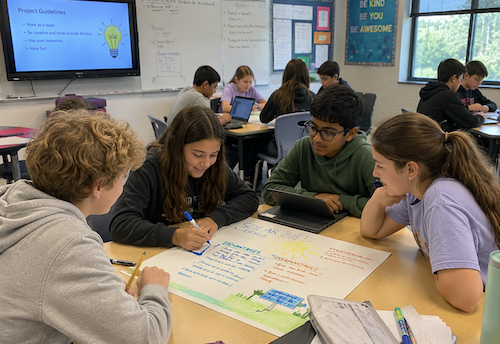
Some schools have begun implementing this approach through dedicated maker spaces, project-based learning units, and cross-curricular projects that blend art, science, and writing. Teachers in these settings report that students develop deeper engagement with content and stronger problem-solving habits when given freedom to explore.
The challenge lies in implementation. Teachers need professional development to design and facilitate open-ended learning. Administrators must balance district accountability demands with classroom flexibility. Parents sometimes worry that time spent on creative projects means less time on tested subjects, though research suggests creative learning actually strengthens core skills like reading comprehension and mathematical reasoning.
Moving forward requires shifting how schools define success. Districts that have allocated resources to creative learning alongside rigorous academics report stronger student engagement and better long-term outcomes. The "low way," then, is not about avoiding