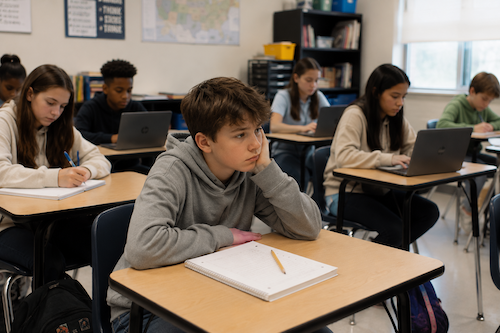
Student disengagement has reached a critical level in classrooms nationwide, prompting educators to examine whether traditional teaching methods are failing to connect with today's learners. The problem extends beyond simple behavioral issues or lack of effort from students. Instead, research points to fundamental disconnects between how classrooms operate and what captures student attention and motivation.
Educators report that students show declining interest in conventional lessons and assignments. This shift reflects broader changes in how young people interact with information and each other, particularly following pandemic disruptions that accelerated remote learning adoption and shifted student expectations about educational delivery.
The root cause lies not in student deficiency but in classroom design itself. When learning experiences rely heavily on passive consumption of content, limited interaction, and one-way instruction, students naturally disengage. Young people today expect personalization, relevance to their lives, and opportunities to collaborate and create rather than simply receive information.
Schools addressing this challenge redesign their learning environments around active engagement. Effective approaches include project-based learning that connects material to real-world problems, collaborative group work that builds on peer learning, and flexible instruction that lets students pursue interests within curriculum frameworks. Teachers also report success integrating student choice into assignments and allowing multiple pathways to demonstrate learning rather than relying on uniform assessments.
Technology plays a supporting role when schools implement it strategically. Tools that enable interactive participation, peer feedback, and personalized pacing tend to boost engagement more than devices used for passive consumption.
The shift requires professional development for teachers to master facilitation techniques, classroom management strategies suited to more dynamic environments, and assessment methods that capture learning beyond standardized tests. Districts investing in these changes report measurable improvements in both attendance and academic performance.
Disengagement serves as a warning signal that classrooms need redesign. Schools that respond by rethinking instruction, environment, and assessment rather than attributing the problem solely to student behavior see stronger results. The opportunity exists