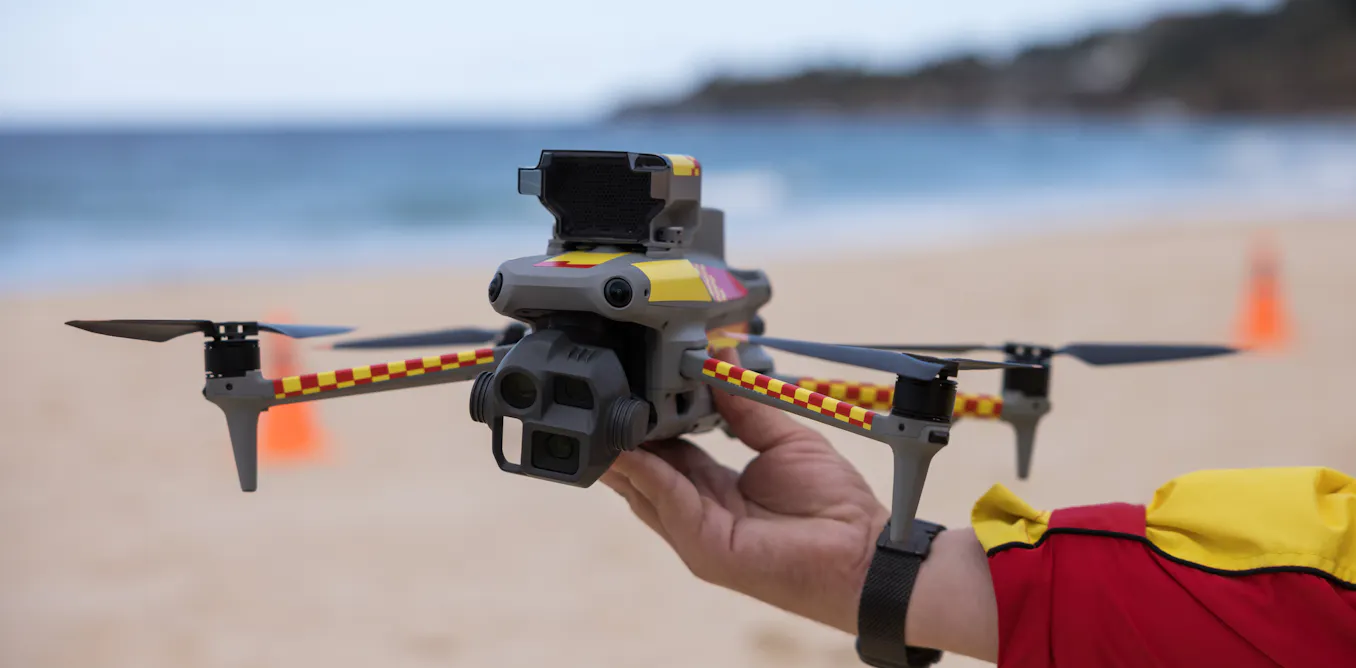
New South Wales is rolling out the world's largest shark-spotting drone program, a major expansion of aerial surveillance meant to boost beach safety. The initiative reflects growing public anxiety about shark encounters, yet experts warn that spotting sharks from above offers limited actual protection.
Drones equipped with cameras can detect sharks in nearshore waters and alert swimmers and surfers to their presence. NSW has invested substantially in this technology across its beaches, treating it as a centerpiece of shark management strategy. The state markets the program as a proactive safety measure that lets beachgoers make informed decisions about when and where to enter the water.
However, the relationship between detection and prevention remains unclear. Spotting a shark does not prevent attacks. Many attacks happen with little warning, in murky water or at dawn and dusk when drone visibility decreases. A shark detected offshore may never approach swimmers. Conversely, a shark can attack without ever being spotted from above.
The drone program appears designed partly to address public perception rather than eliminate actual risk. Beach-related shark deaths in Australia remain statistically rare, yet media coverage and social media amplify fear. Visible drone activity reassures beachgoers that authorities are monitoring waters, even if that monitoring cannot guarantee safety.
Experts distinguish between risk reduction and risk elimination. Drones reduce some risks by providing real-time information. They cannot eliminate shark encounters. Swimmers and surfers face inherent, unavoidable danger when entering the ocean. Nets, drum lines, and warning systems function similarly: they lower probability but offer no absolute protection.
NSW's commitment to drones reflects a realistic approach to beach management. The program operates within constraints that matter. Budget limitations, weather conditions, and the sheer scale of coastal areas mean no surveillance system covers all beaches all the time. Drone operators must balance coverage across multiple locations.
The practical value of shark-spotting drones lies in