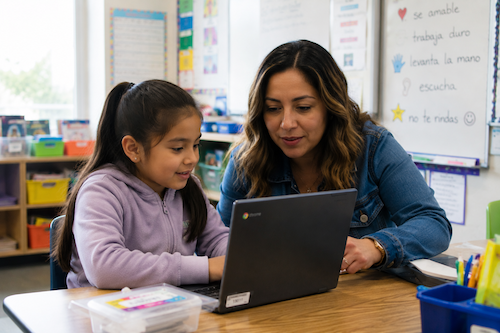
Multilingual students face a distinct challenge in American classrooms. They must simultaneously learn academic content while developing English proficiency. Traditional instruction often treats language as a separate subject rather than as a tool for thinking and communication across all classes.
Oracy, the art of speaking and listening, offers a direct solution to this gap. Unlike literacy, which focuses on reading and writing, oracy emphasizes the spoken word as a foundation for deeper learning. For multilingual learners, strong speaking and listening skills unlock access to classroom participation, peer collaboration, and academic reasoning.
When schools embed oracy practices into daily instruction, the results shift student engagement. Students move from passively answering questions to actively reasoning through problems. They transition from silent observers to confident contributors. This shift matters because multilingual learners often hold back from participation due to anxiety about language accuracy or accent, not lack of knowledge.
Oracy instruction includes structured talk routines, debate practices, and collaborative discussion protocols. Teachers train students to articulate ideas, ask clarifying questions, and build on peer responses. These practices work across subject areas, from math to science to social studies.
Research from the UK, where oracy programs have gained traction in schools, shows measurable gains in student achievement and confidence. Students who develop strong oracy skills perform better on assessments and show increased willingness to participate in class.
The barrier to widespread adoption in U.S. schools often comes down to teacher preparation and resources. Many educators lack training in oracy-specific instruction. Textbooks and curricula rarely prioritize speaking and listening with the same rigor given to reading and writing.
For multilingual students, oracy is not optional enrichment. It serves as the bridge between their home languages and academic English, between silence and voice. Schools that recognize this connection and invest in oracy instruction see multilingual learners transform from struggling students into engaged thinkers who contribute meaningfully