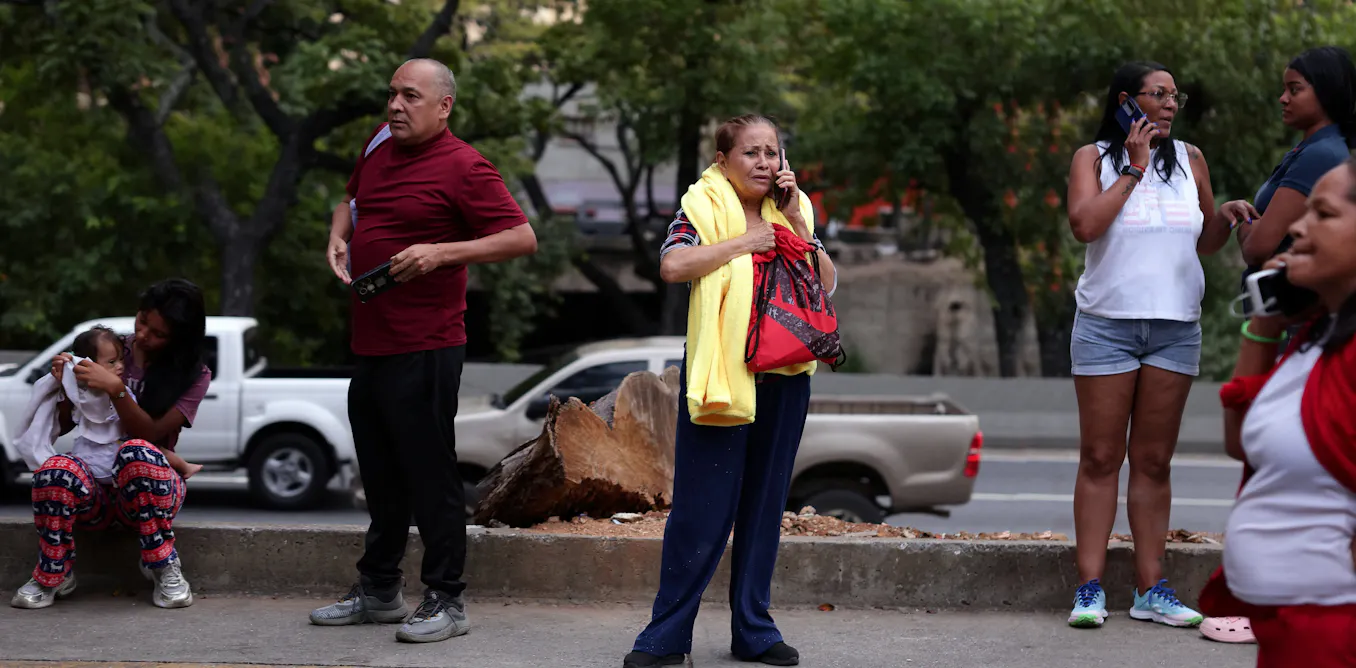
# How Venezuelans at Home and Abroad Fill Relief Gaps After Earthquake
Venezuela's government has left earthquake survivors without adequate aid, forcing citizens inside the country and members of the diaspora to organize independent relief efforts. Private networks and voluntary organizations have become the primary lifeline for affected communities where state response has stalled.
The Venezuelan diaspora, scattered across Latin America, the United States, and Europe, coordinates donations and supplies from abroad. Exiled Venezuelans leverage international connections to channel medical equipment, food, and shelter materials back to disaster zones. Simultaneously, grassroots organizations within Venezuela distribute these resources directly to affected neighborhoods, bypassing bureaucratic delays.
This pattern reflects deeper governance failures. Venezuela's economic collapse has depleted public resources and eroded institutional capacity. The state lacks funding for disaster response infrastructure. Emergency services operate with minimal equipment. Hospitals already struggling before the earthquake now face overwhelming patient loads with scarce supplies.
Citizens have responded by creating informal supply chains and volunteer networks. Community leaders coordinate rescue operations. Religious organizations open shelters. Neighbors share resources. These efforts operate without government coordination or official recognition, yet they reach populations faster than state mechanisms could.
The diaspora's role proves particularly crucial. Venezuelans abroad send remittances that families use for survival. During crises, they mobilize these networks toward collective aid. Social media platforms enable real-time communication between exiles and people on the ground, allowing donors to identify specific needs and track where supplies reach.
This reliance on civil society for basic disaster relief underscores a critical governance gap. Citizens fill roles that governments typically handle. Earthquake response reveals how thoroughly the Venezuelan state has withdrawn from providing essential services. Where functional governments deploy military units, coordinate logistics, and manage recovery, Venezuelan communities depend on volunteer labor and diaspora generosity.
The effectiveness of these grassroots efforts demonstrates both civic resilience and institutional abandonment.