# Teaching Word Breakdown Unlocks Student Comprehension
A teacher at TeachThought discovered that phonetic decoding alone leaves gaps in student understanding. Students who could successfully sound out words often froze when asked to explain meaning, revealing a disconnect between pronunciation and comprehension.
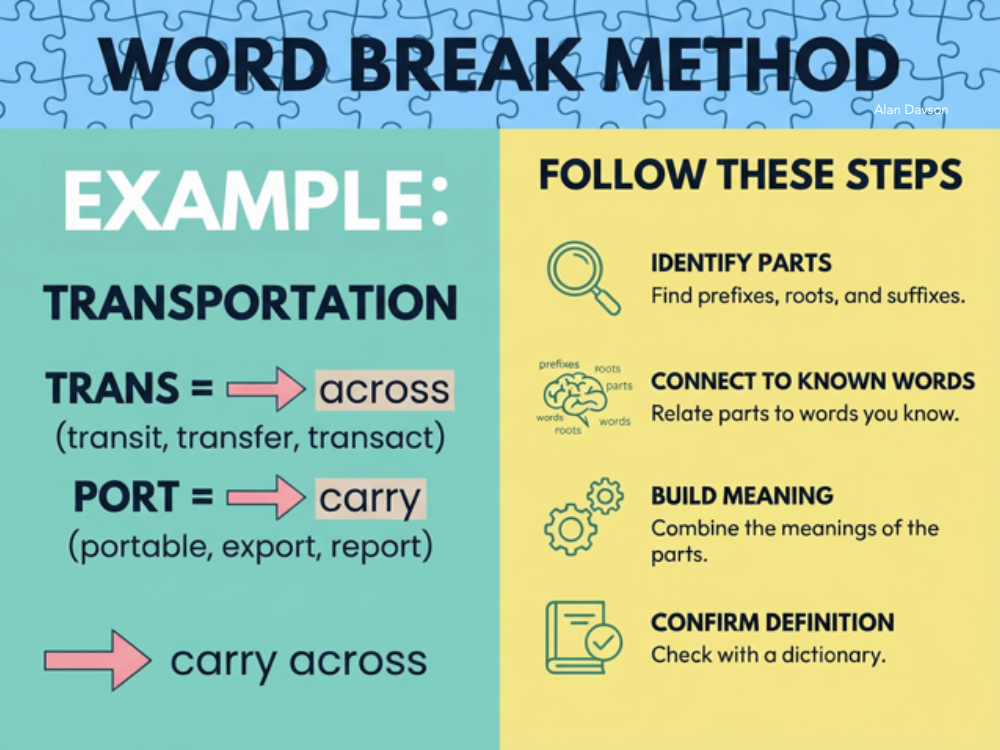
The solution involved explicit instruction in breaking words into component parts. By analyzing prefixes, suffixes, and root words, students built mental frameworks for understanding unfamiliar vocabulary. This morphological awareness transformed how they approached text.
The method works because it addresses a specific cognitive bottleneck. A student can pronounce "unhappiness" by sounding it out, but breaking it into "un" plus "happy" plus "ness" reveals the meaning structure. That layered understanding sticks better than isolated phonics.
The teacher noticed immediate shifts in student confidence. When encountering new words, students stopped treating them as obstacles and started treating them as puzzles with knowable solutions. They asked better questions. They took ownership of their own vocabulary growth.
This approach matters because reading comprehension depends on both word recognition and semantic understanding. Schools that prioritize only phonics risk producing readers who sound fluent but don't retain meaning. Conversely, teaching morphology without phonics leaves struggling readers unable to access words at all.
The evidence for morphological instruction is solid. Research shows that explicit teaching of word parts improves vocabulary retention, reading speed, and comprehension across grade levels. Students with dyslexia and English learners benefit especially.
Implementation requires modest changes. Teachers can dedicate 10-15 minutes weekly to word study focused on patterns rather than isolated words. Students build personal morpheme charts. They track how prefixes and suffixes change word meaning and function.
The shift from "sound it out and move on" to "analyze the structure and own the meaning" empowers students as active language learners. It works