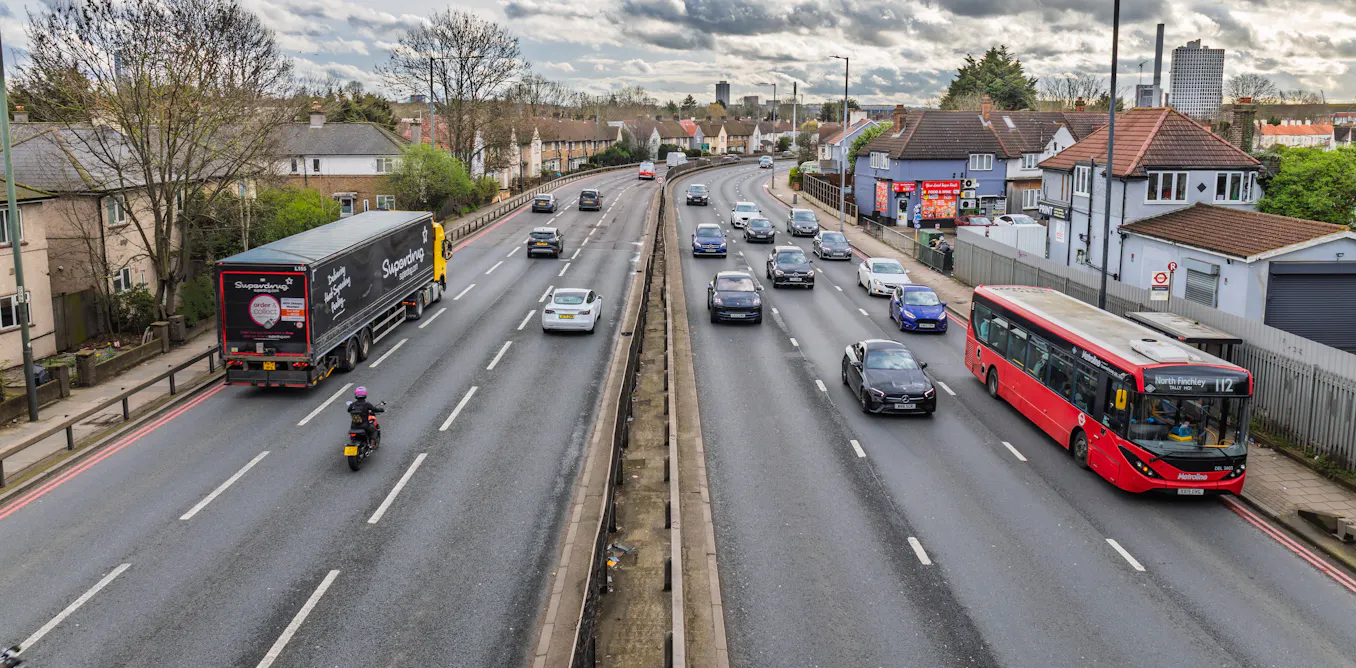
# Traffic Volume and Perceived Crime Risk: New Research Finds Connection
Research published recently finds that motor traffic volume correlates with residents' fear of street crime, even when actual crime rates remain stable or decline.
The study examined how traffic density affects perceptions of safety from vandalism, burglary, and violent crime in residential neighborhoods. Researchers discovered that increased vehicular traffic creates psychological conditions that heighten crime anxiety among residents, independent of whether crime actually increases.
The findings matter for urban planning and community safety policy. Cities often prioritize vehicle throughput without measuring effects on resident wellbeing or neighborhood cohesion. When traffic rises, foot traffic typically decreases. Fewer pedestrians on streets can reduce natural surveillance and community presence, creating conditions where residents feel exposed to crime risk.
The research adds weight to longstanding urban design theory suggesting that active streets with pedestrian activity create safer neighborhoods. High traffic volume may paradoxically reduce that protective activity by making streets feel dangerous to walk through.
The connection between traffic and perceived crime has practical implications for municipal decisions about street design, speed limits, and traffic diversion routes. Neighborhoods experiencing increased through-traffic often report safety concerns from residents, and this study provides evidence supporting those concerns as grounded in environmental factors rather than imagination.
Planners and policymakers can use these findings when evaluating traffic management proposals. Reducing motor traffic in residential areas through street redesign, lower speed limits, or traffic calming measures may improve both actual safety and resident perception of safety. The research suggests that street improvements benefiting pedestrians simultaneously address traffic concerns and strengthen neighborhood social cohesion, creating conditions where residents feel secure enough to use public space.
This work contributes to growing evidence that urban streets serve functions beyond vehicle movement. How cities design and manage traffic shapes resident behavior, neighborhood interaction, and the sense of safety that determines whether communities thrive.