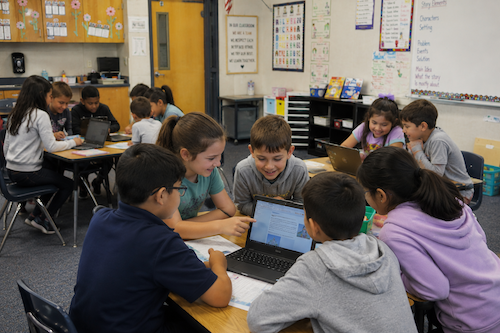
Project-based learning (PBL) transforms how students understand mathematics by connecting abstract concepts to real-world design challenges. One approach involves having students design functional backpacks, a tangible project that requires them to apply geometry, measurement, and budgeting skills.
This teaching method addresses a persistent problem in math education: students memorize procedures without understanding why they work. When students design backpacks, they must calculate surface area and volume to determine fabric requirements, use proportional reasoning to scale patterns, and manage costs within budget constraints. These tasks demand genuine mathematical thinking rather than formula repetition.
The backpack project illustrates why PBL works for math instruction. Students see immediate consequences when their calculations are wrong. A backpack with incorrect measurements won't hold supplies properly. A design that exceeds budget won't get built. These natural feedback loops reinforce learning more effectively than worksheets or practice problems.
Elementary and middle school years represent a critical window for building mathematical foundations. Each concept builds on previous knowledge, meaning gaps compound over time. PBL addresses this by ensuring students grasp underlying principles rather than surface-level procedures. When students understand why they multiply length by width to find area, they can apply that reasoning to new problems they haven't seen before.
Teachers implementing PBL in math classrooms report shifts in student attitudes. Students who previously viewed math as disconnected rules begin recognizing mathematics as a tool for solving practical problems. This perspective change matters because it builds intrinsic motivation. Students work harder on projects they care about than on abstract practice sets.
The backpack design project also develops communication and collaboration skills alongside mathematics. Students must explain their reasoning to teammates, defend design choices, and negotiate solutions when group members disagree. These soft skills matter in both further education and careers.
Schools adopting PBL for mathematics see students develop stronger conceptual understanding and increased confidence with mathematical reasoning. The approach demands more preparation