# An Updated Guide To Questioning In The Classroom
Teachers who master questioning unlock a powerful tool for assessing genuine learning. The right question at the right moment reveals whether students truly understand material or simply memorize facts.
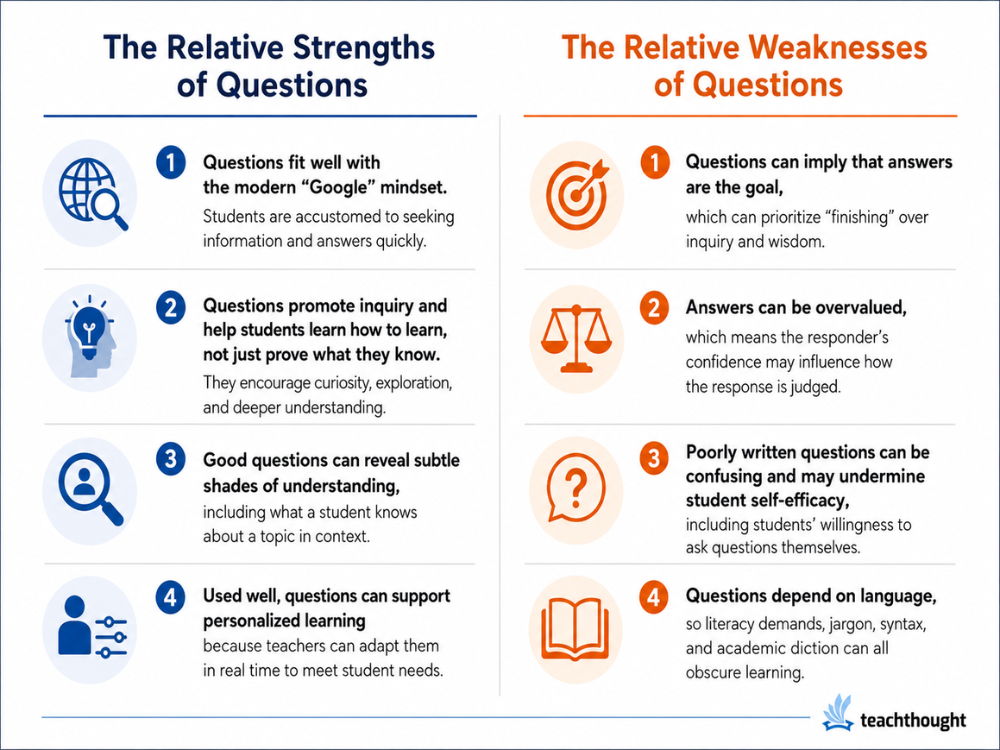
Effective classroom questioning goes beyond simple recall. Teachers using strategic questioning can prompt deeper thinking, reveal student misconceptions, and guide learners toward discovering answers themselves. Research in cognitive science shows that students who engage with well-designed questions develop stronger critical thinking skills than those who passively receive information.
The timing and type of question matter enormously. Open-ended questions encourage elaboration and reasoning. Closed questions verify specific knowledge. Follow-up questions push students to justify their thinking and build on initial responses. Teachers who pause after asking questions, resisting the urge to fill silence immediately, give students time to process and formulate thoughtful answers rather than quick guesses.
Questioning also serves diagnostic purposes. When a student provides an incomplete or incorrect answer, skilled teachers ask clarifying questions to pinpoint where understanding breaks down. Is the student confused about vocabulary? Do they lack prerequisite knowledge? Did they misunderstand the initial question? These discoveries shape instruction far more effectively than a simple right-or-wrong grade.
Modern classrooms benefit from structured questioning frameworks. Bloom's taxonomy remains useful for categorizing questions from low-level recall to high-level synthesis and evaluation. Teachers can deliberately plan questions that move students up the cognitive ladder throughout a lesson.
Digital tools now support questioning strategies that traditional classrooms struggled with. Learning management systems and classroom response platforms allow teachers to ask all students simultaneously and see response patterns instantly. This eliminates the bias toward students who raise hands first while capturing honest thinking from quieter learners.
The shift toward questioning as a core teaching skill reflects broader changes in education. Rather than positioning teachers as information dispensers, modern pedagogy recognizes them as facilitators who help students construct knowledge. Students