# The Hidden Cost of Fragmented Student Data in K-12 Schools
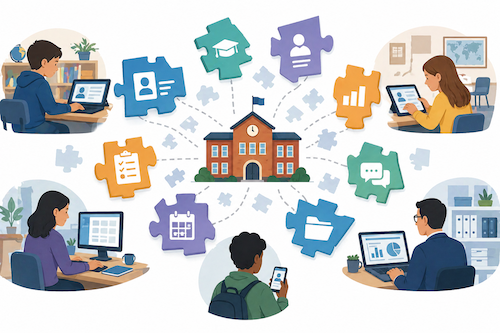
K-12 schools operate with student data scattered across multiple disconnected systems, creating operational inefficiencies that ripple through classrooms and administrative offices. When attendance records, grades, behavioral incidents, special education files, and health information live in separate databases that don't communicate, schools lose the ability to see a complete picture of each student.
This fragmentation wastes staff time. Teachers spend hours manually entering information into different platforms. Counselors cannot quickly access relevant health or behavioral data when a student needs support. Administrators cannot generate comprehensive reports without pulling data from multiple sources and reconciling inconsistencies. Schools pay licensing fees for systems that duplicate functionality rather than integrate seamlessly.
The educational impact runs deeper. When data sits in silos, schools miss warning signs. A student's declining attendance may never connect to their falling grades or increased discipline referrals because no single system tracks all three. Teachers lack real-time insight into student progress across subjects. Early intervention becomes reactive rather than proactive.
Fragmented data also damages the school-home partnership. Parents receive inconsistent messages from different school departments. One teacher reports a student is thriving while another notes behavioral concerns, not because the observations differ but because they operate from incomplete information. Communication breaks down when schools cannot quickly share coordinated updates.
The cost extends to equity. Schools serving disadvantaged communities often lack resources to integrate systems. Students from these districts miss tailored support because schools cannot efficiently track their needs. Data fragmentation widens opportunity gaps.
Federal and state mandates add complexity. Schools must report enrollment, testing, and discipline data to comply with regulations, yet their internal systems do not align with reporting requirements. Staff spend time translating between formats rather than using data to improve instruction.
Addressing this requires investment in integrated student information systems that allow secure data sharing across departments while protecting student privacy.