# Teacher Confidence in Math Requires District Support and Continuous Learning
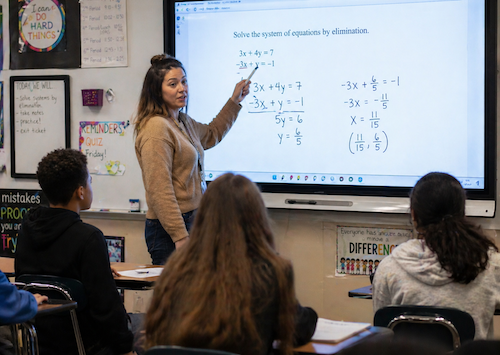
A veteran high school math teacher with two decades of classroom experience discovered a fundamental gap in her understanding of early mathematics instruction. After attending her first professional learning session focused on elementary math, she recognized that her prior assumptions about why students struggle did not account for foundational gaps that begin in primary grades.
This realization underscores a core challenge district leaders face: teacher confidence in mathematics instruction directly shapes student outcomes, yet many educators lack the targeted professional development to teach math effectively at their grade level.
The insights emerging from practitioner experience point to four actionable lessons for district administrators building teacher math confidence.
First, professional learning must address specific grade-level content and pedagogy. Teachers need training tailored to where they teach, not generic math workshops. A high school algebra instructor requires different preparation than a second-grade teacher introducing number sense.
Second, districts should create space for teachers to examine their own assumptions about mathematics learning. When experienced educators encounter new evidence about how students learn math, they adjust their practice. Professional learning that surfaces misconceptions proves more effective than top-down mandates about instruction.
Third, ongoing coaching and peer collaboration sustains confidence gains. One professional development session produces minimal lasting change. Teachers need regular follow-up, classroom observations with feedback, and opportunities to learn alongside colleagues teaching the same grade and content.
Fourth, district leaders themselves must understand math instruction. When principals and curriculum directors lack math content knowledge, they cannot effectively support teachers or evaluate quality instruction. Leadership development in mathematics pedagogy matters as much as teacher development.
As teacher confidence grows, the way math feels in the classroom shifts. It evolves into a more positive experience for both educators and students. Districts that invest in systematic, grade-level-specific professional learning, coupled with administrative understanding of math pedagogy, create conditions where teacher confidence rises and student achievement follows.