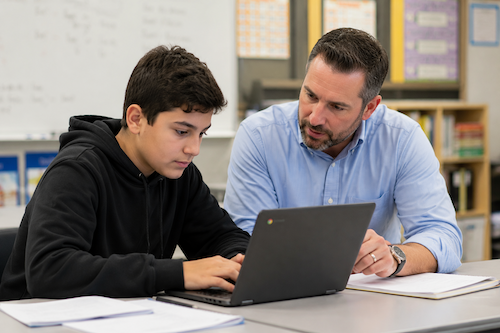
A teacher reflects on the limits of artificial intelligence in the classroom, arguing that automated feedback cannot replace the human connection students need to thrive.
The educator describes a pivotal conference with a student named Steven, who had struggled with his final project. During their face-to-face conversation, the teacher discovered Steven was wrestling with self-doubt and perfectionism. An AI system would have flagged incomplete work and offered generic suggestions. Instead, the teacher listened, asked questions, and helped Steven understand his own capabilities.
This distinction matters. AI feedback tools can process assignments quickly and identify technical errors. They cannot read hesitation in a student's voice or recognize when discouragement blocks learning. They cannot adjust their tone based on individual student needs or celebrate growth in ways that build confidence.
Teachers report growing pressure to integrate AI into grading and feedback systems. Districts promote these tools as efficiency gains. Some platforms promise to reduce teacher workload by 40 percent or more. But this premise misses what teaching actually requires.
Effective feedback depends on relationship. When a teacher knows a student's learning patterns, family context, and strengths, feedback becomes targeted and motivating. Students perform better when they trust that an adult understands their specific situation. This trust emerges through repeated, genuine interaction, not algorithm-generated comments.
The teacher's account raises a practical question for schools adopting AI grading systems. What gets lost when efficiency becomes the priority? Classrooms face real constraints. Teachers juggle 150 or more students per day. Time shortage is real. AI tools address that pressure.
Yet the solution matters as much as the problem. Schools can reduce grading workload through other means: smaller class sizes, adjusted curriculum, collaborative grading protocols among teachers, or redesigned assignments that require less individual commenting.
None of these approaches are cheaper than AI software. They require institutional commitment and resources schools often lack. Still, the choice between