# Finding the "Low Way": Reclaiming Creativity in Schools
Schools across the country are grappling with how to balance standardized testing demands against student creativity. The tension between measurable outcomes and open-ended learning has become one of education's most persistent challenges.
Assessment and accountability systems have reshaped classroom priorities. Teachers face pressure to demonstrate student progress through standardized metrics, often leaving limited time for exploratory learning. This pressure trickles down to students, who internalize the message that efficiency and correct answers matter most.
The "low way" metaphor captures something essential about what schools are losing. It represents the winding path, the detours, the unplanned discoveries that happen when students have freedom to explore questions without rushing toward predetermined answers. Creative work requires revision cycles, failed experiments, and time to think without immediate evaluation. These processes rarely show up on test scores.
Yet creativity remains foundational to learning and future success. Employers consistently cite creative problem-solving as essential for workforce readiness. Students who never practice divergent thinking, who never revise work based on feedback, and who never pursue genuine curiosity develop narrower cognitive capabilities.
The challenge is not choosing between rigor and creativity. Schools need both. Assessment provides clarity on whether students master core skills. Creativity builds the ability to apply those skills in novel situations, collaborate effectively, and adapt to change.
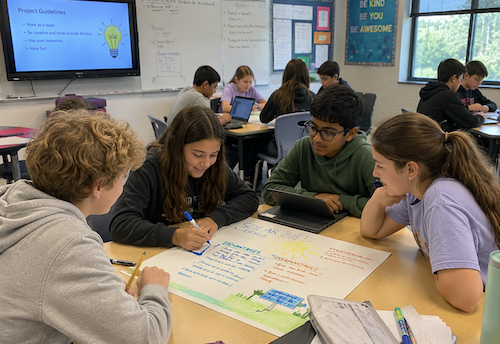
Schools reclaiming space for creativity typically make structural changes. Some build project-based units where students tackle real problems. Others protect time for student choice within the curriculum. A few dedicate specific classes or blocks to creative exploration, from writing workshops to design challenges to artistic inquiry.
Teachers need permission and resources to teach this way. Professional development that models how to scaffold creative work, provide feedback that develops thinking rather than judges products, and assess growth alongside completion makes the difference.
The "low way" doesn't mean abandoning standards.