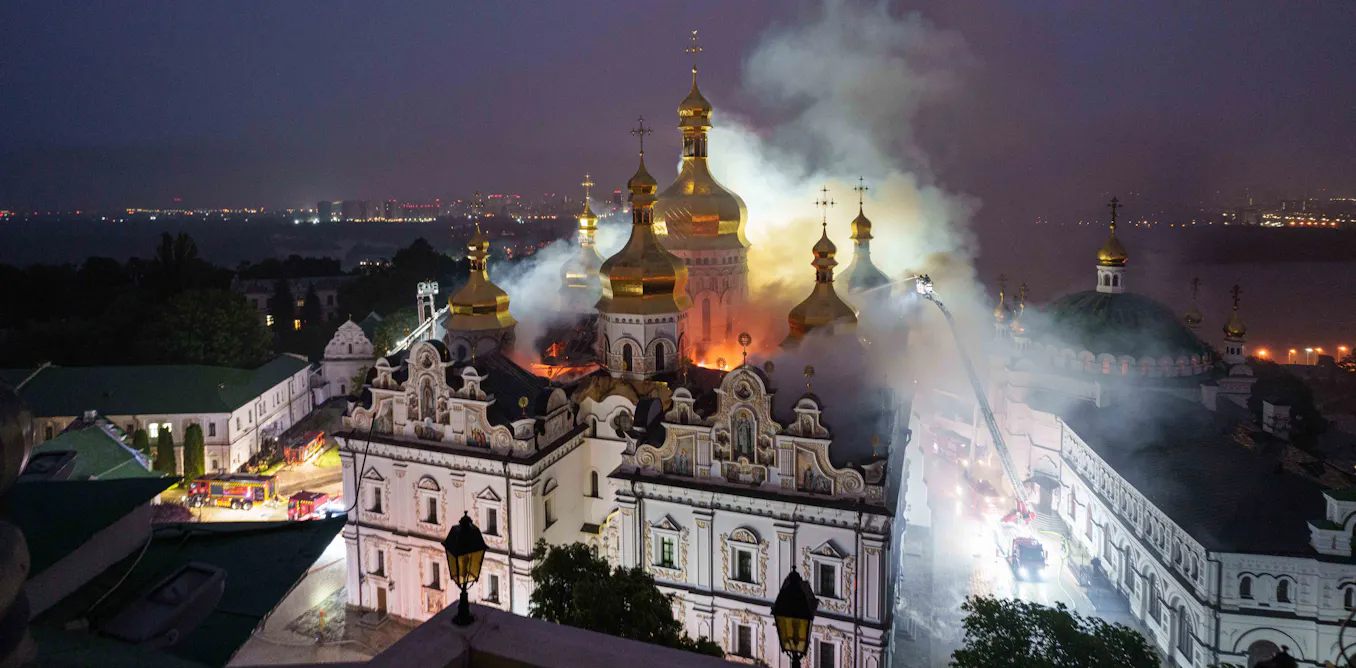
Russia's military strike on a centuries-old Ukrainian monastery complex underscores the conflict's expanding assault on cultural and spiritual heritage. The attack targeted a site of deep religious significance to Ukrainians, reflecting a broader pattern Moscow has pursued throughout the war.
The monastery represents centuries of Ukrainian identity and Orthodox Christian tradition. Its destruction carries symbolic weight beyond military strategy. Analysts describe the targeting as an effort to erase Ukrainian cultural markers and weaken national cohesion during wartime.
The strike reflects Russia's evolving military approach. As conventional operations face sustained Ukrainian resistance, attacks on civilian infrastructure and heritage sites have intensified. This shift suggests Moscow faces mounting pressure on multiple fronts and may compensate through psychological operations targeting Ukrainian morale and identity.
Religious institutions hold particular importance in Ukrainian society and history. Monasteries function as repositories of cultural memory, artistic achievement, and spiritual continuity. Destroying such sites damages not just buildings but collective identity. This aligns with patterns documented at other Ukrainian cultural sites, churches, and libraries that have suffered Russian bombardment.
International observers have documented similar attacks across Ukraine. UNESCO has tracked damage to dozens of heritage sites since the 2022 invasion began. Military analysts note that targeting cultural infrastructure serves dual purposes: demoralizing civilian populations while eliminating symbols of Ukrainian independence and Orthodox autonomy from Russian ecclesiastical control.
The monastery attack also reflects Russia's desperation, as military historians suggest. Conventional gains have stalled, forcing strategic recalibration toward civilian targets and psychological warfare. This shift indicates Russian forces cannot achieve decisive military victory through traditional means.
Ukraine has mobilized international support to document cultural destruction. UNESCO investigations and local preservation efforts work to record damage for potential future accountability. The targeting of heritage sites may violate international humanitarian law provisions protecting cultural property during armed conflict.
For Ukrainian citizens, each attack on cultural institutions reinforces national resolve. Religious communities have emerged as sources of resistance and