# Schools Face Stricter Digital Accessibility Requirements Under Updated ADA Rules
The U.S. Department of Justice has tightened enforcement of digital accessibility standards under the Americans with Disabilities Act, creating new compliance obligations for public schools nationwide. The deadline for schools to audit and remediate their digital platforms is approaching, affecting websites, learning management systems, video content, and educational apps.
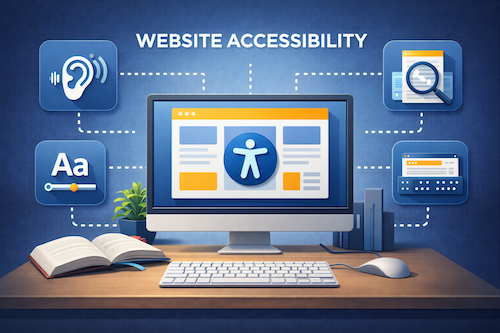
Schools must ensure their digital infrastructure meets Web Content Accessibility Guidelines (WCAG) 2.1 standards. This includes providing alt text for images, captions for videos, keyboard navigation features, and screen reader compatibility. Without these accommodations, students with disabilities, visual impairments, hearing loss, and mobility challenges cannot access educational content on equal terms.
The compliance push stems from a series of legal settlements and enforcement actions. The DOJ has targeted school districts for inaccessible websites and online learning platforms, particularly following widespread remote learning adoption during the pandemic. Districts that failed to provide accessible digital tools faced lawsuits and costly remediation orders.
Schools face three core challenges. First, many lack dedicated IT staff trained in accessibility auditing. Second, retrofitting existing digital systems costs money and time. Third, ongoing compliance requires continuous monitoring as schools adopt new platforms and technologies.
District leaders should begin by conducting digital accessibility audits across all student-facing platforms. Schools can use automated testing tools like WAVE or axe DevTools to identify issues, though manual testing catches barriers automation misses. Staff training on accessibility standards helps prevent future problems.
The legal stakes are real. Schools that ignore compliance invitations from the DOJ risk lawsuits from disability advocacy groups and families. Several districts have settled cases for hundreds of thousands of dollars in damages and remediation costs.
Accessible digital design benefits all learners, not just those with disabilities. Captions help students in noisy environments. Clear navigation helps anyone confused by poor design. Keyboard