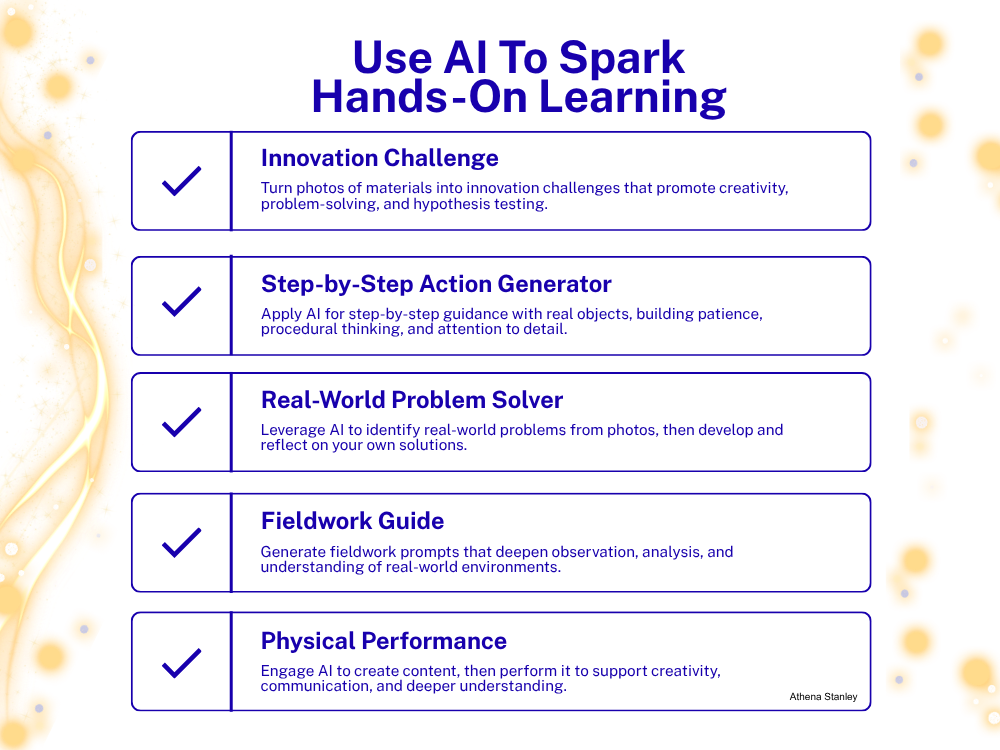
# From Screen To World: 5 Ways To Use AI To Spark Hands-On Learning In K–12 Classrooms
Teachers can move AI tools beyond passive consumption to drive real-world problem solving in K–12 classrooms. One practical approach has students photograph their immediate environment—a schoolyard, home, or neighborhood—then use AI to identify problems without receiving prefabricated solutions. This method anchors abstract learning to tangible spaces students inhabit daily.
The framework bridges digital tools with physical action. Rather than letting AI hand students answers, educators ask generative systems to surface issues: cracked sidewalks, erosion patterns, poor lighting, waste management gaps. Students then investigate root causes, research solutions, and propose interventions. The AI becomes a lens for observation rather than a shortcut past thinking.
This approach addresses a persistent tension in K–12 education: screens often isolate learning from real consequences. When students identify a drainage problem in their schoolyard using an AI photo analysis, they're not completing an assignment in isolation. They're building toward action—whether that means presenting findings to administration, designing a fix, or advocating for change.
The strategy works across grade levels and subjects. Elementary students might photograph playground wear patterns and brainstorm safety improvements. Middle schoolers could document community accessibility issues and research ADA compliance. High schoolers might analyze local environmental data and propose policy changes to city planners.
Teachers implementing this approach report deeper engagement. Students spend less time passively consuming information and more time asking questions about their surroundings. They develop observation skills, systems thinking, and civic agency. The work also surfaces student expertise about their own communities in ways traditional textbooks cannot.
Implementation requires minimal setup. Most students carry cameras on phones or tablets. Free and low-cost AI tools can analyze images. The scaffold comes from teachers designing thoughtful guiding questions, not from AI h