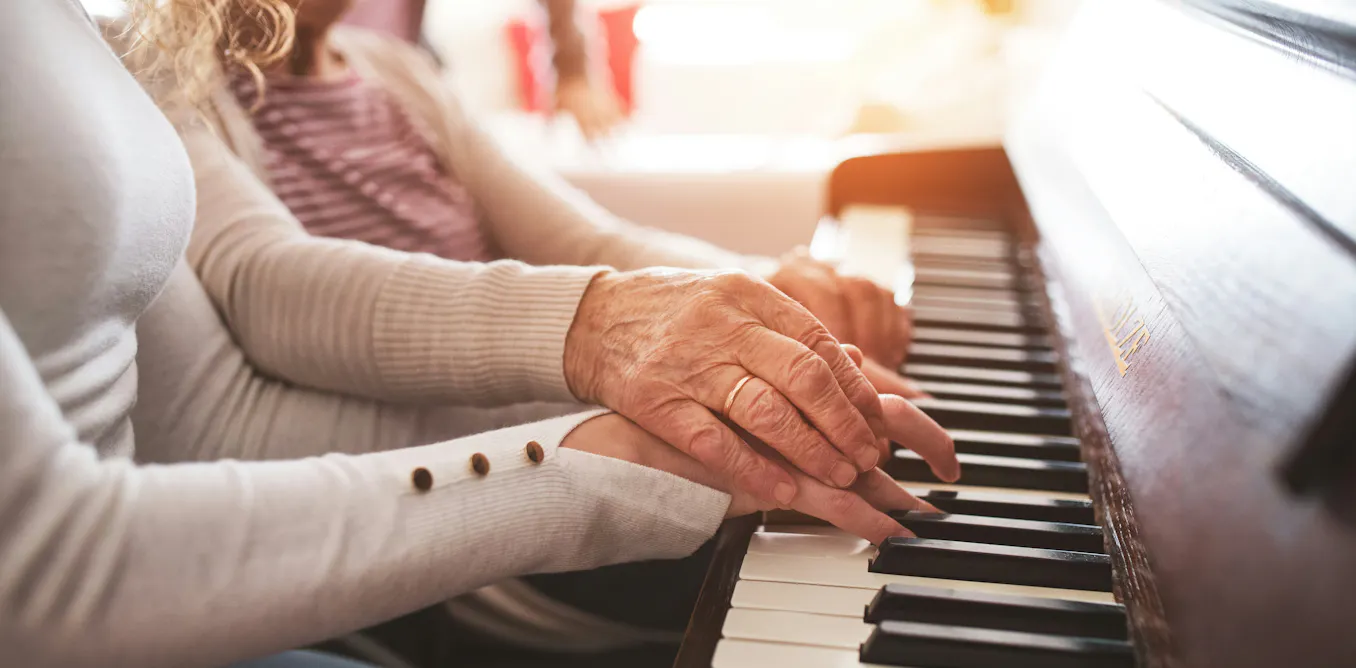
# Music in Dementia Care Moves Beyond Treatment to Foster Identity
Music offers more than therapeutic benefit in dementia settings. New thinking reframes music's role from a clinical intervention to a vehicle for preserving identity, enabling self-expression, and creating meaningful human connection.
Researchers and care practitioners increasingly recognize that music engagement serves dementia patients differently than traditional treatment models suggest. Rather than using music purely to manage symptoms like agitation or anxiety, evidence supports music as a tool for maintaining personhood and dignity.
The shift reflects a broader evolution in dementia care philosophy. Patients with cognitive decline retain emotional and sensory responsiveness long after memory loss advances. Music activates these preserved capacities in ways that spoken language often cannot. A patient may not remember a family member's name but recognizes a familiar song, triggering emotional connection and momentary clarity.
Practitioners now design music programs that prioritize choice and participation over passive listening. Patients select songs meaningful to their personal histories. Some engage in singing, instrument playing, or movement. These active experiences reinforce individual identity and autonomy, which institutional care can erode.
Healthcare facilities implementing music programs report improvements in quality of life metrics beyond behavior management. Patients show reduced social withdrawal, enhanced mood, and increased engagement with staff and family members. Family visitors often describe rekindled moments of recognition during shared musical experiences.
The evidence base continues expanding. Studies from dementia care institutions document how music participation correlates with lower medication use for behavioral symptoms and improved nutritional intake. Music also creates structured social interaction, addressing the isolation that accompanies cognitive decline.
Implementing this approach requires training staff to facilitate music experiences rather than simply administer them. It involves understanding each patient's musical history and preferences, then embedding music into daily routines and care moments.
This reorientation recognizes a fundamental truth: dementia strips away memory and cognition but cannot entirely eliminate the person beneath.