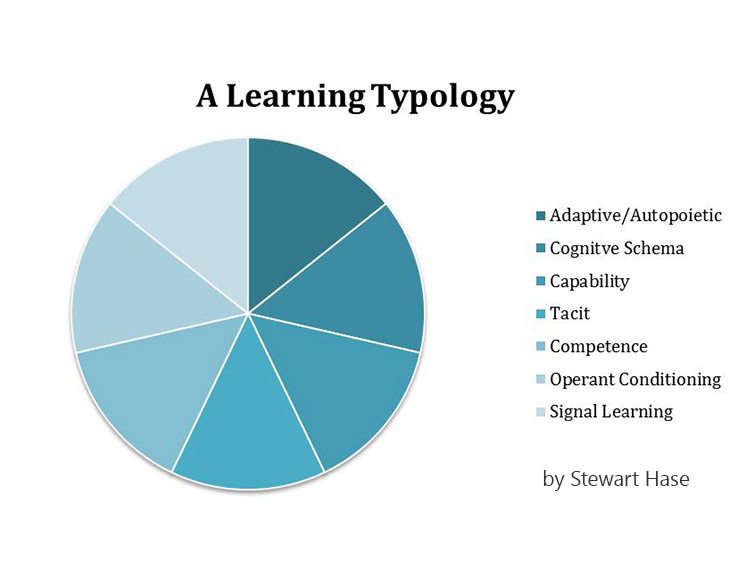
# A Learning Typology: 7 Ways We Come To Understand
TeachThought has released a learning typology that identifies seven distinct pathways through which people acquire understanding. Unlike a taxonomy (which ranks items in a hierarchy), a typology treats these learning modes as equally valid and complementary approaches.
The distinction matters for educators. Taxonomies like Bloom's Revised Taxonomy organize learning by complexity levels, from basic recall to evaluation. Typologies recognize that people simply learn differently without one path being superior to another.
The framework shifts how teachers design instruction. Rather than assuming all students progress through the same cognitive stages, educators using a typology approach can map lessons to multiple learning pathways simultaneously. A student who struggles with abstract reasoning might excel through kinesthetic or social learning modes. Another might need visual-spatial processing to grasp the same concept.
This aligns with research on learning styles and multiple intelligences, though contemporary neuroscience remains mixed on whether tailoring instruction to declared learning preferences consistently improves outcomes. What research does support: exposure to content through varied modalities strengthens retention and transfer across different contexts.
For classroom implementation, the typology suggests teachers should build lessons that engage several learning pathways at once. A history unit might combine visual timelines (visual-spatial), peer discussion (social-linguistic), hands-on primary source analysis (kinesthetic), and personal reflection (intrapersonal). Students can gravitate toward their strengths while developing weaker areas.
The framework also has implications for educational equity. Students from different backgrounds often have different access to learning modalities. A typology-based approach that values multiple pathways may reduce the advantage that traditional schooling gives to students who already think in linguistic and logical-mathematical modes.
TeachThought positions the typology as a planning tool rather than a label box. Teachers aren't sorting students into types but recognizing that understanding can be