# Sustainable Change Starts With Educator Voice
School leaders across the country are rolling out new initiatives, instructional frameworks, technologies, and student support approaches. Success depends on one critical factor that many overlook: teacher input in designing and executing these changes.
When educators help shape school improvement efforts from the start, they become invested stakeholders rather than passive recipients of top-down mandates. Teachers understand classroom realities that administrators may miss. They know which approaches work with their students, which ones create unnecessary burden, and where implementation will stumble without on-the-ground adjustments.
Research on school change shows a consistent pattern. Initiatives that include robust educator voice during planning phases stick around and produce results. Those imposed without teacher consultation often face resistance, die out after a few years, or consume resources without delivering promised outcomes. The difference lies in commitment and buy-in.
Teachers spend six hours daily with students. They see which instructional strategies engage learners, which ones fall flat, and where inequities persist. When leaders invite this expertise into decision-making spaces, they access invaluable intelligence about what will actually work in their specific school context. A framework that succeeds in an affluent suburban district may need significant adaptation for a high-poverty urban school or a rural district with limited resources.
Beyond practical benefits, educator voice shapes school culture. Teachers report higher job satisfaction and lower burnout when they influence the direction of their workplace. This retention matters enormously. Experienced teachers represent institutional knowledge and stability that students need, particularly in under-resourced communities where turnover compounds disadvantage.
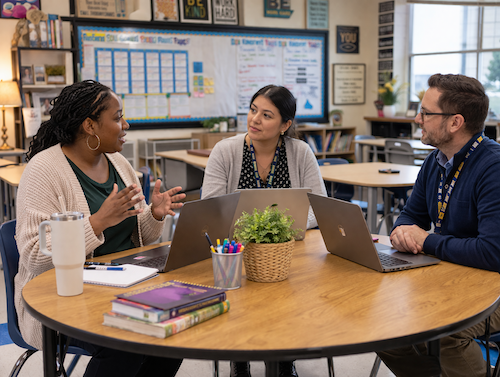
Schools implementing sustainable change prioritize mechanisms for educator input. Some use collaborative design teams where teachers co-lead improvement efforts alongside administrators. Others establish regular feedback loops where teachers can surface concerns and suggest modifications as new initiatives launch. The strongest schools treat teachers as partners in improvement rather than implementers of someone else's vision.
Change that sticks comes