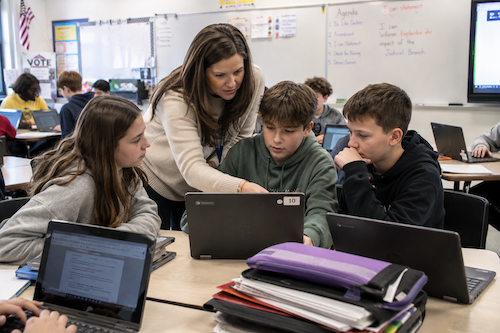
Illinois educators are pushing for statewide guidance on artificial intelligence that reflects actual classroom conditions rather than theoretical ideals. Teach Plus Illinois, a teacher leadership organization, released recommendations calling for AI policies grounded in real-world school environments.
The group argues that statewide guidance must empower teacher leaders to shape implementation decisions. Teachers, not distant policymakers, understand the specific needs of their students and schools. Educators want authority to determine how AI tools serve their classrooms, rather than applying one-size-fits-all rules that ignore local context.
Centering human connection remains a core concern. While AI tools can assist with research, problem-solving, and content creation, educators emphasize that meaningful teacher-student relationships cannot be automated. The guidance must protect time and space for direct instruction, mentorship, and collaboration that build learning communities.
Illinois students already use AI daily. Generative AI platforms help them gather research, brainstorm solutions, and develop creative projects. Rather than banning these tools, educators recognize the need for clear frameworks that teach responsible use. Guidelines should address plagiarism prevention, critical thinking about AI-generated information, and understanding algorithmic bias.
The recommendations reflect broader national conversations about AI in education. Districts nationwide struggle with balancing innovation and protection. Some ban ChatGPT and similar platforms outright. Others integrate them into curricula with safeguards. Illinois educators reject both extremes, calling instead for flexible, teacher-informed policies.
Implementation requires resources. Teachers need professional development to understand AI capabilities and limitations. Schools need time to pilot approaches and gather evidence about what works. Student privacy protections and data security standards must accompany any AI adoption.
Teach Plus Illinois emphasizes that effective policy emerges from listening to educators. Teachers interact with students daily and understand pedagogical challenges that bureaucrats miss. Their input shapes policies that work in practice, not just in policy documents.
The