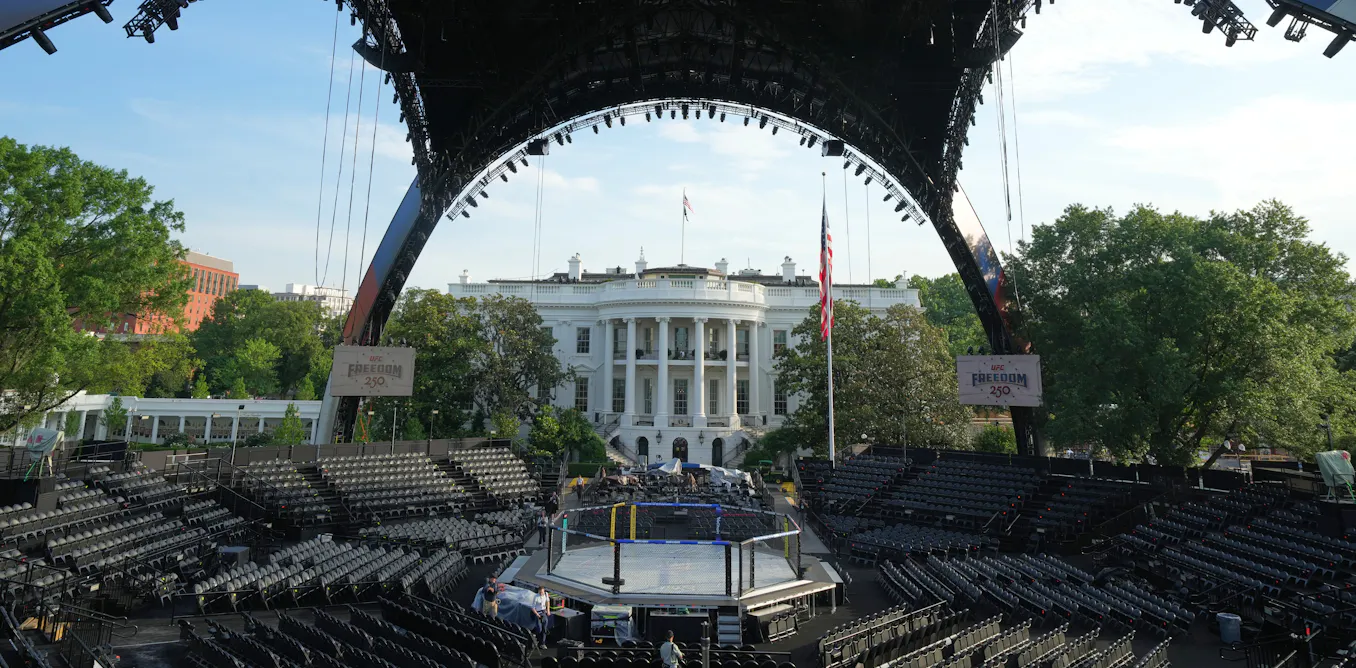
# White House to Host UFC Event Amid Political Debate
The White House announced plans to host a Ultimate Fighting Championship event, sparking debate about the intersection of combat sports and political messaging. Donald Trump has championed the event as beneficial for the nation, while prominent UFC commentator Joe Rogan dismissed it as a "gimmick."
The event represents an unusual convergence of entertainment and politics at the highest levels of government. UFC, once considered a fringe sport, has grown into a multi-billion dollar enterprise with mainstream legitimacy. This White House platform elevates the sport's cultural status while generating controversy about appropriate uses of presidential venues.
Trump's support reflects broader political strategy. Combat sports audiences skew toward demographics that align with his electoral coalition. By hosting UFC at the White House, the administration signals alignment with fight culture and appeals to younger, more male-dominated viewership. The event projects an image of strength and toughness central to Trump's political brand.
Rogan's "gimmick" critique points to deeper concerns. Critics worry the event instrumentalizes sports for political gain, transforming the White House from a ceremonial center of governance into a campaign platform. Others question whether such entertainment events belong at the nation's most formal address.
UFC itself has benefited from mainstream acceptance. The organization secured major television deals, mainstream media coverage, and celebrity crossovers. A White House event represents a seal of cultural approval that the sport's founders could never have imagined during its underground days.
The controversy reflects evolving American politics where cultural symbols become political battlegrounds. Sports, entertainment, and politics increasingly blur together. Youth engagement strategies now routinely involve combat sports and streaming platforms.
The White House UFC event crystallizes these tensions. It demonstrates how contemporary political messaging leverages sports culture to build coalitions and project power. Whether framed as advancement for American sport or political theatre, the event signals the sport's arrival