# Finding Space for Creativity in Schools
A parent's simple question about taking the "low way" instead of the highway became a metaphor for how schools can reclaim student creativity. The contrast between fast routes and slower, exploratory paths mirrors a fundamental tension in American education today.
Schools increasingly prioritize standardized testing, measurable outcomes, and accountability metrics. These systems serve a purpose. They provide data. They track progress. They offer benchmarks for comparison. Yet this focus on the "high way" of efficiency and quantifiable results often squeezes out the exploratory, revision-heavy work that creativity requires.
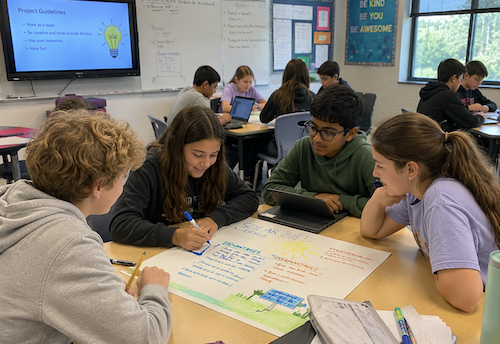
The "low way" represents something different. It's the classroom space where students ask open-ended questions, experiment with ideas, make mistakes, revise their thinking, and discover solutions without a predetermined endpoint. A student writing a story might draft it five times. A student designing a solution might test three prototypes. A student exploring a social problem might follow curiosity wherever it leads, even off the planned syllabus.
This isn't about abandoning rigor or standards. Rather, it's about balance. Assessment and accountability do matter. They prevent educational gaps from widening silently. But they work best alongside unstructured time for exploration. Research in cognitive science shows that creative thinking develops through play, trial and error, and wrestling with authentic problems, not just through test preparation.
The challenge lies in implementation. Teachers face competing demands. Standardized test schedules loom. District benchmarks demand coverage of specific content. Class time feels perpetually squeezed. Adding "low way" time requires schools to make deliberate choices about what matters most and then protect that time fiercely.
Some schools have found workable models. Project-based learning, maker spaces, and student-led inquiry units create pockets of exploratory space within accountability structures. These approaches don't eliminate testing, but they shift the