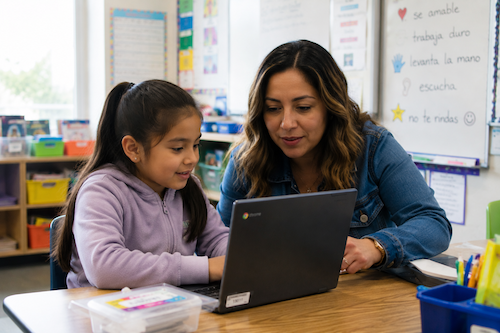
Multilingual students face a hidden barrier in American classrooms. Schools teach reading and writing intensively, but spoken language skills, or oracy, remain neglected.
Oracy refers to the ability to express ideas clearly through speech and to listen actively in conversation. For multilingual learners, this skill directly impacts their ability to participate in class discussions, ask questions, and build relationships with peers. Without explicit oracy instruction, these students fall behind despite strong reading comprehension or writing skills.
The problem runs deeper than classroom participation. Research shows that students who develop oracy skills earlier gain confidence in academic settings. They contribute more to group work, engage more fully in problem-solving activities, and demonstrate better retention of content. Yet most schools embed language arts instruction in reading and writing curricula while treating speaking and listening as byproducts rather than core competencies.
Oracy becomes a bridge for multilingual learners in particular. When students receive targeted instruction in how to structure arguments verbally, how to ask clarifying questions, and how to participate in academic dialogue, they transition from passive listeners to active contributors. Schools report that when oracy is embedded intentionally into lessons across subjects, students move from answering questions to reasoning through problems, from mere participation to genuine contribution, and from silence to voice.
Implementation requires teacher training and curricular shifts. Educators need professional development in how to model effective speaking, create safe spaces for linguistic risk-taking, and provide feedback on oral communication. Schools in the United Kingdom have pioneered oracy programs with measurable results. The Oracy Project found that systematic oracy instruction improved student engagement and academic outcomes across demographics.
American districts now face a choice. Continue current approaches that privilege written over spoken language, or invest in comprehensive oracy programs that unlock potential in multilingual learners. The evidence suggests the latter approach closes gaps faster and builds more confident, articulate students prepared for college and careers where