# Belfast Violence Echoes Sectarian Displacement From the Troubles
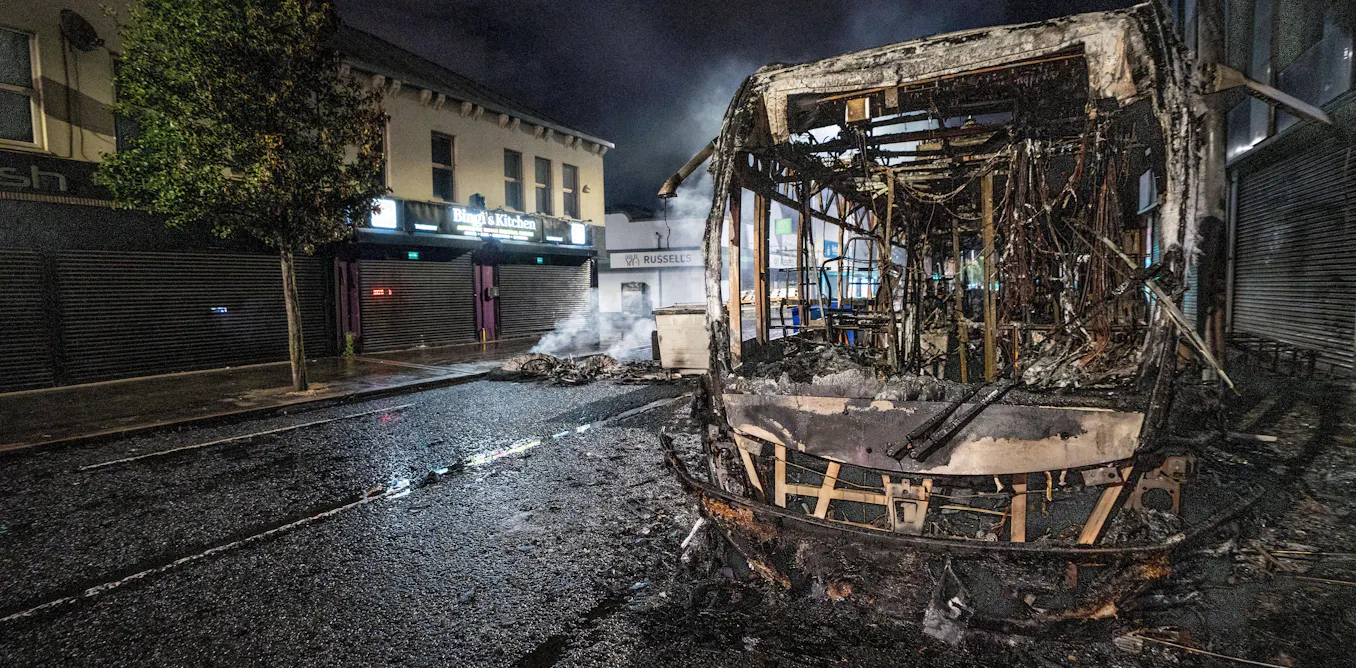
Violence in Belfast has reignited painful memories of forced displacement during the decades-long conflict. Families fled burning homes as recent unrest swept through the city, mirroring patterns of sectarian violence that characterized the Troubles.
The incidents have prompted educators and historians to confront how schools address this period. The Troubles, which lasted roughly from 1968 to 1998 and killed over 3,500 people, systematically displaced thousands of families from mixed neighborhoods. Communities were deliberately targeted based on religion and ethnicity, forcing people to abandon homes.
Current violence demonstrates that the trauma of displacement remains unresolved in Belfast's social fabric. Education systems across Northern Ireland have grappled with how to teach this history honestly without reopening sectarian wounds. Schools in Catholic and Protestant areas often present competing narratives of the conflict, with students receiving fragmented accounts depending on their school's affiliation.
The Educational Authority in Northern Ireland has advocated for shared education programs, where students from different religious backgrounds learn together. Research shows these initiatives reduce prejudice and build understanding. However, implementation remains inconsistent across districts.
Teachers working in divided communities face particular pressure. They must address trauma while avoiding language that reinforces tribal identities. Some schools use oral history projects where survivors share experiences, while others rely on structured curricula that emphasize reconciliation rather than blame.
The recent violence exposes gaps in this approach. Young people who have no direct memory of the Troubles may not understand its lasting consequences, yet they inherit its divisions. Without robust, evidence-based education about displacement, sectarian violence, and its human cost, schools risk producing citizens unprepared to resist cycles of conflict.
Educators argue that teaching the Troubles requires naming specific communities, documenting individual loss, and examining structural inequality that fueled violence. Avoidance or