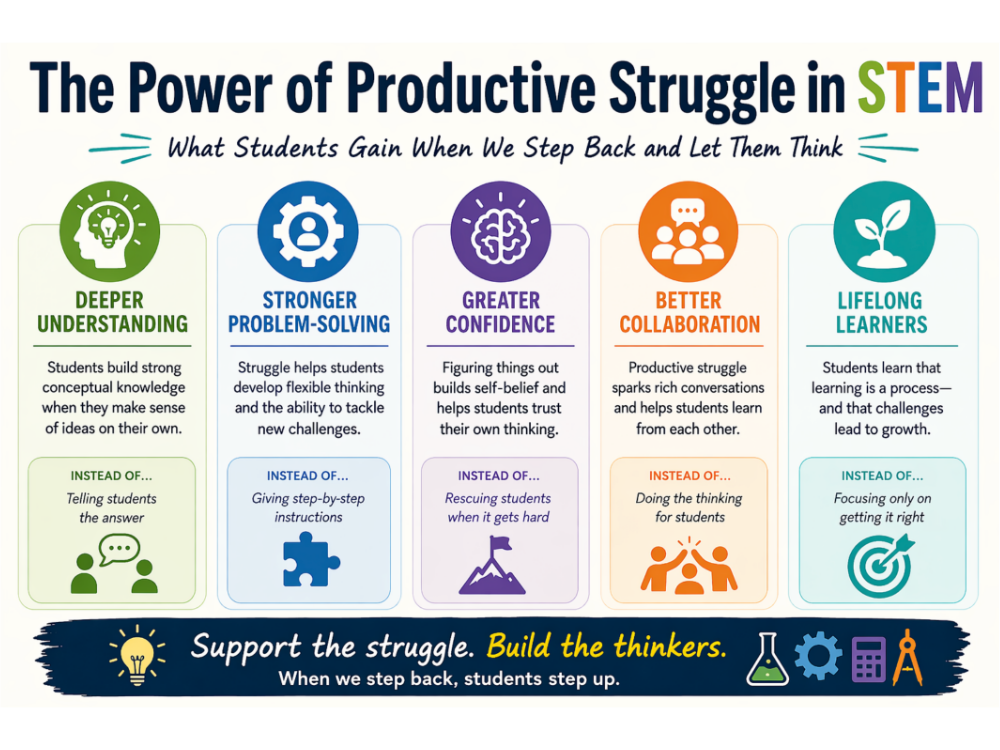
# When STEM Lessons Are Too Easy, Students Stop Thinking
Teachers across STEM subjects face a persistent problem. Students who breeze through lessons without struggle often disengage mentally, assuming they already understand the material. This false sense of mastery closes the door to deeper learning.
The classroom culture around engagement has shifted. Many educators prioritize keeping students busy and satisfied, believing activity equals learning. When STEM lessons lack appropriate challenge, students coast. They complete tasks without wrestling with difficult concepts, without building resilience, and without developing the problem-solving skills that define real STEM competency.
Research in cognitive science supports this observation. Learning requires cognitive load. When tasks sit below a student's skill level, the brain doesn't strain to form new neural pathways. The student feels competent but hasn't grown. This phenomenon, sometimes called the "competence plateau," happens frequently in STEM classrooms where teachers aim for broad engagement over productive struggle.
The solution requires shifting how teachers design STEM instruction. Lessons should sit in what psychologist Lev Vygotsky called the "zone of proximal development." Tasks must challenge students beyond their current independent ability while remaining achievable with support. A student stuck on a problem, then guided toward the solution, builds metacognitive awareness and lasting understanding.
Teachers need permission to make lessons harder. This contradicts the engagement-first mentality that dominates many schools. Students may feel less happy during a truly rigorous STEM lesson. They may ask more questions and experience frustration. This discomfort signals learning, not failure.
Balancing engagement with rigor matters most. STEM education serves students best when classrooms normalize struggle as part of thinking. Students should leave STEM lessons tired from mental effort, not restless from boredom. Teachers who build this culture help students develop grit alongside competence, preparing them for genuine problem-solving beyond the