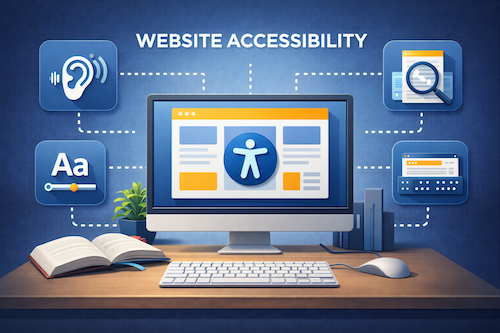
Schools face new compliance requirements under updated Americans with Disabilities Act regulations that affect how institutions serve students and families with disabilities. The deadline for meeting these accessibility standards is approaching, making immediate action necessary for district leaders and technology staff.
The ADA updates expand the definition of digital accessibility in public education. Schools must ensure websites, learning management systems, online documents, and virtual learning platforms meet Web Content Accessibility Guidelines (WCAG) standards. This includes providing alt text for images, captioning for videos, accessible PDFs, keyboard navigation, and sufficient color contrast for visually impaired users.
Districts that fail to comply face potential lawsuits and federal enforcement action. Recent settlements show the serious consequences. A Texas school district paid $3 million in 2024 to resolve accessibility violations. A New York district settled for $1.8 million over inaccessible online learning platforms.
Schools should audit all digital content immediately. This means reviewing websites, Google Classroom pages, YouTube videos, district apps, and any vendor software students use. Administrators must identify gaps and prioritize fixes based on impact. Videos used school-wide need captioning first. PDFs in common circulation require alt text next.
Hiring an external accessibility consultant can accelerate compliance. Some districts lack in-house expertise to navigate WCAG 2.1 AA standards, the benchmark most schools target. Consultants cost between $5,000 and $50,000 depending on district size, but provide actionable remediation plans.
Training staff matters too. Teachers and tech coordinators need to understand accessibility when creating content. Many educators don't realize a PowerPoint without alt text on images violates the ADA. Professional development sessions help build compliance into routine practice rather than treating it as a one-time project.
Vendors also bear responsibility. Districts should require accessibility compliance in contracts with edtech companies, learning platforms, and assessment tools.