# The Screen-Time Debate's Blind Spot
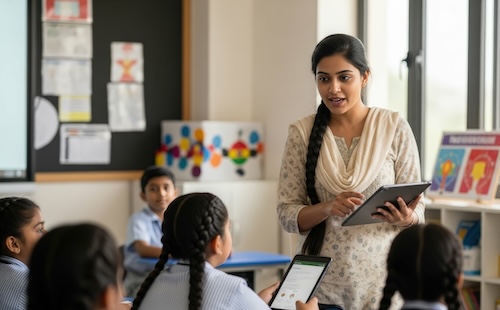
Educators across the globe confront a genuine tension when considering artificial intelligence in classrooms. A fifth-grade teacher in São Paulo voiced a concern that resonates internationally: how can teachers leverage AI to improve instruction without simply adding another screen to students' school day?
The question exposes a blind spot in current education debates about technology. The conversation often reduces to screen time as the problem, treating any digital tool as an inherent risk to student development. Yet this framing misses what teachers actually need from AI adoption.
The real opportunity sits with teacher planning and preparation. When AI handles lesson design, curriculum mapping, and instructional scaffolding, teachers gain time to focus on direct student interaction, small-group instruction, and individualized feedback. The point of AI is not to replace human instruction or force students into passive screen consumption. It is to give teachers what they actually need: structured support and recovered classroom time.
Current research on screen time often conflates passive consumption (streaming videos, social media scrolling) with active learning through technology-enhanced instruction. The distinction matters. A student using AI to receive personalized feedback on a writing assignment differs fundamentally from the same student watching videos passively.
Teachers working in resource-limited settings face particular pressure. Many lack time to differentiate instruction or develop customized lesson plans for diverse learner needs. AI tools can reduce that burden, freeing educators to spend more time on teaching rather than administrative prep work.
The blind spot emerges when policymakers and researchers focus exclusively on reducing screen time without examining how technology reshapes teaching work. Prohibiting AI tools in schools may protect against screen exposure but simultaneously denies teachers the structural support they desperately need.
A smarter approach acknowledges that not all screen time is equivalent. Questions should shift from "how much screen time is too much" to "what does screen time accomplish"