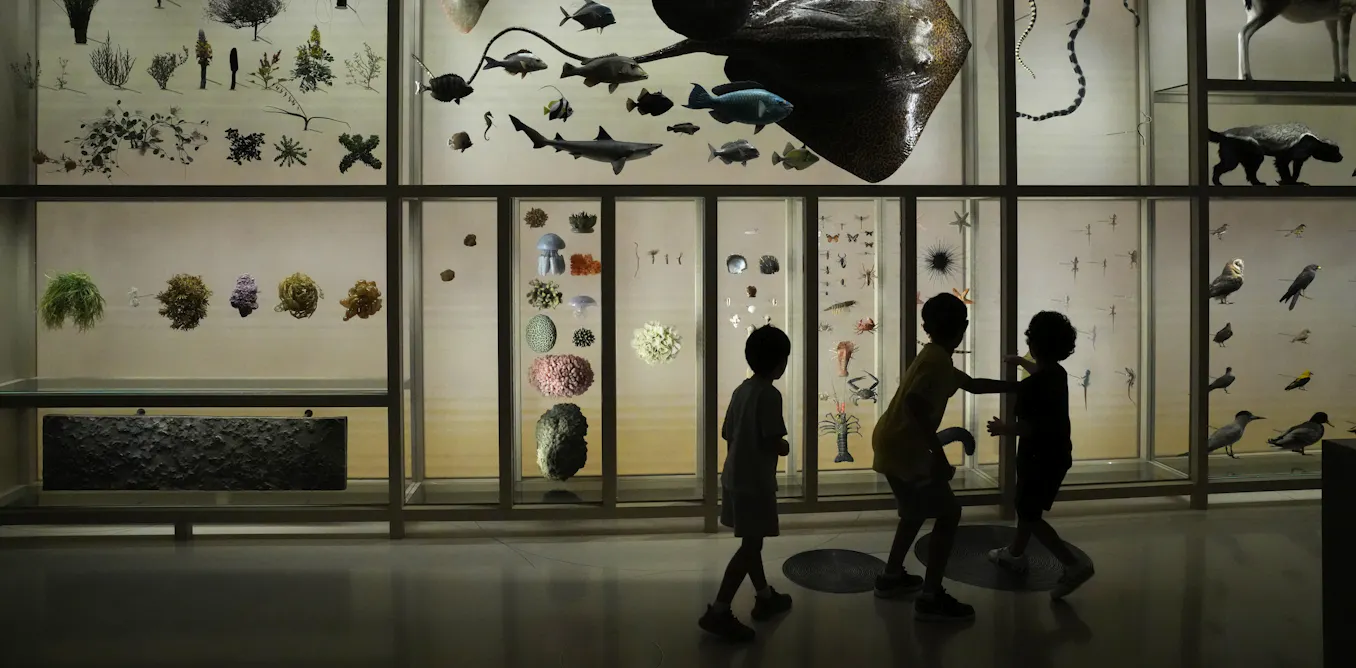
# A Day at the Museum: How Following Kids' Leads Supports Curiosity Across Generations
Adults who observe and respond to children's natural questions unlock powerful learning moments, research shows. When caregivers and educators pause to follow a child's lead rather than impose a predetermined agenda, they create space for deeper engagement and meaningful discovery.
This approach works particularly well in informal learning settings like museums, where children encounter objects and ideas without classroom structure. A child pointing at a dinosaur fossil or asking why a painting looks a certain way signals genuine curiosity. When adults answer those questions directly, ask follow-up questions, or explore the answer together, they validate the child's thinking and deepen understanding.
The practice benefits both generations. Children develop stronger problem-solving skills and confidence in their own thinking. Adults reconnect with how children perceive the world, gaining fresh perspectives on familiar objects and ideas. These intergenerational exchanges create shared memories while modeling how to stay curious throughout life.
Effective adult-child museum visits don't require expertise. They require attention. An adult noticing that a child lingers over a particular exhibit, asking "What catches your eye?" or "What do you wonder about?" opens dialogue. Resisting the urge to immediately provide answers gives children space to form their own theories first. This small shift from telling to asking changes the learning dynamic entirely.
Museums invest in programs around this model because informal spaces allow for this kind of flexible, child-led exploration. When families move at their own pace without test scores or curriculum benchmarks, children ask more questions. Adults become co-investigators rather than instructors.
Research from early childhood and museum education fields confirms that this responsive approach strengthens vocabulary development, reasoning skills, and long-term retention. Children remember experiences where adults listened to them far more than experiences designed solely for instruction.
Applying this principle extends beyond museums. Homes, parks, and