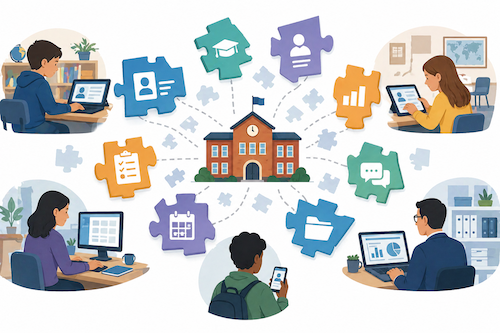
K-12 schools operate with fragmented student data systems that create operational inefficiencies and harm the school-home connection, according to recent analysis.
Student information scattered across multiple platforms and databases prevents educators from accessing complete records quickly. Teachers cannot see comprehensive attendance patterns, behavioral history, or academic progress without consulting several disconnected systems. Administrators spend resources consolidating data manually instead of using insights to improve instruction.
The fragmentation compounds problems for families. Parents receive conflicting information from different teachers or departments. Schools struggle to identify struggling students early because warning signs sit in separate databases. Special education teams cannot coordinate services efficiently when student records exist in isolation. Counselors and social workers duplicate intake processes because they cannot access shared information.
Data security risks emerge when schools maintain multiple systems. Each platform represents a potential breach point. Redundant data entry introduces errors that follow students through their academic careers. Schools waste budget on maintaining overlapping systems rather than investing in integrated platforms.
The problem extends beyond convenience. When attendance data sits in one system and behavioral data in another, schools miss patterns linking chronic absenteeism to academic decline. Teachers cannot quickly identify which students need intervention because they must manually cross-reference multiple sources. This delay pushes struggling students further behind.
Schools addressing fragmentation implement unified student information systems that consolidate demographics, grades, attendance, behavior, special education services, and health information into single platforms. Systems like Skyward, PowerSchool, and Infinite Campus allow real-time data sharing across departments and staff members.
Integration requires upfront investment in technology infrastructure and staff training. Schools must also establish clear data governance policies defining who accesses what information and for what purposes. Privacy protections and FERPA compliance become more complex with centralized systems.
Districts that successfully consolidate student data report faster response times to academic struggles, improved communication with families, and better resource allocation. Teachers gain immediate visibility into student needs. Administrators