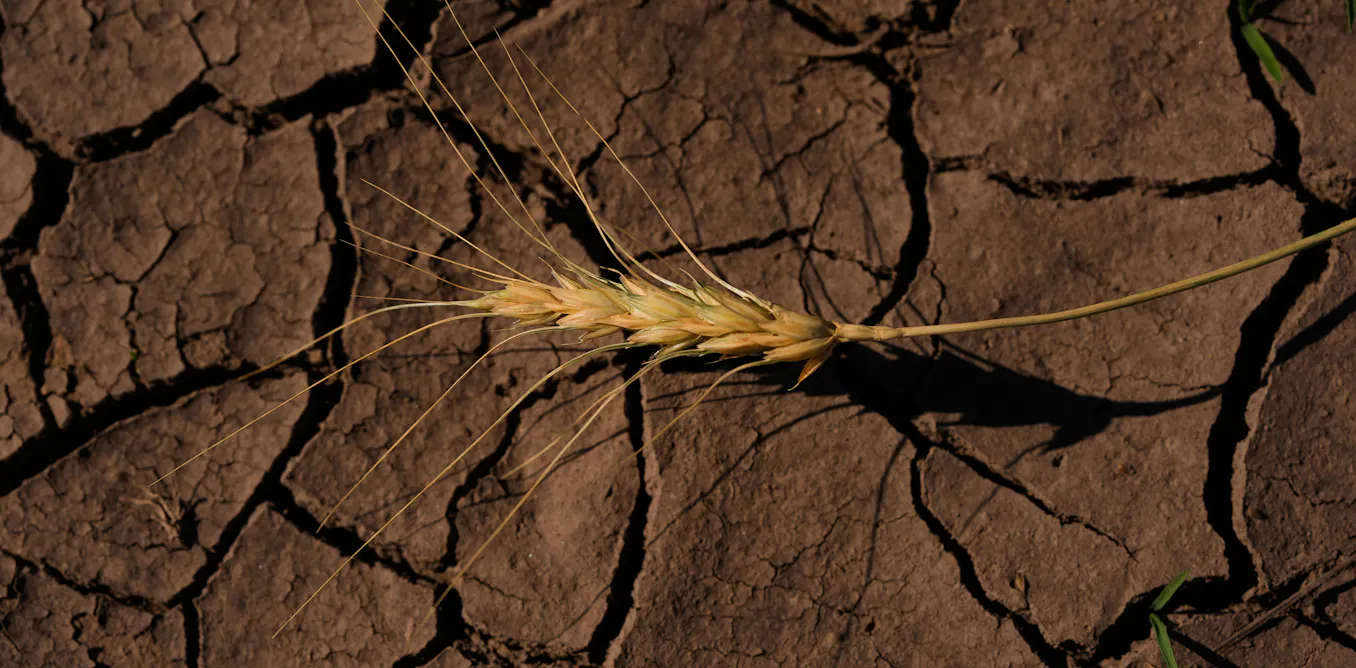
# Climate Change Threatens Global Food Supply Through Simultaneous Crop Failures
The world's agricultural system relies on a geographic buffer that climate change is rapidly eroding. Major grain-producing regions across North America, Eastern Europe, South Asia, and Australia developed as separate breadbaskets partly because weather patterns typically shifted risk around the globe. When drought struck one region, others could compensate.
That assumption no longer holds. Climate change is synchronizing extreme weather events across multiple continents simultaneously. In 2022, droughts devastated crops in Canada, the European Union, and India at the same time. Russia's invasion of Ukraine disrupted wheat and fertilizer exports from another major producer. These overlapping crises exposed how fragile global food security has become.
The modern food system concentrates production in a small number of countries. Russia and Ukraine together supply about 30 percent of global wheat exports. India, China, and the United States produce the vast majority of rice and corn. When multiple breadbaskets fail together, countries cannot easily find alternative suppliers.
Climate scientists predict more synchronous failures ahead. Rising temperatures are shifting growing seasons and intensifying weather extremes in ways that affect major agricultural zones at once. The 2023 North American heat dome damaged crops across multiple states and provinces. Flooding in Pakistan destroyed substantial portions of that nation's rice harvest.
Food prices spike when supply contracts. Vulnerable populations in developing nations face hunger first and hardest. The 2008 food crisis, triggered partly by simultaneous crop failures in wheat-producing countries, contributed to social unrest and political instability across Africa, Asia, and the Middle East.
Agricultural adaptation offers some protection. Shifting crops to climate-resilient varieties, improving irrigation efficiency, and diversifying production regions could reduce vulnerability. Expanding crop storage and building stronger trade relationships help buffer against single-year shocks.
The underlying challenge remains structural. The efficiency