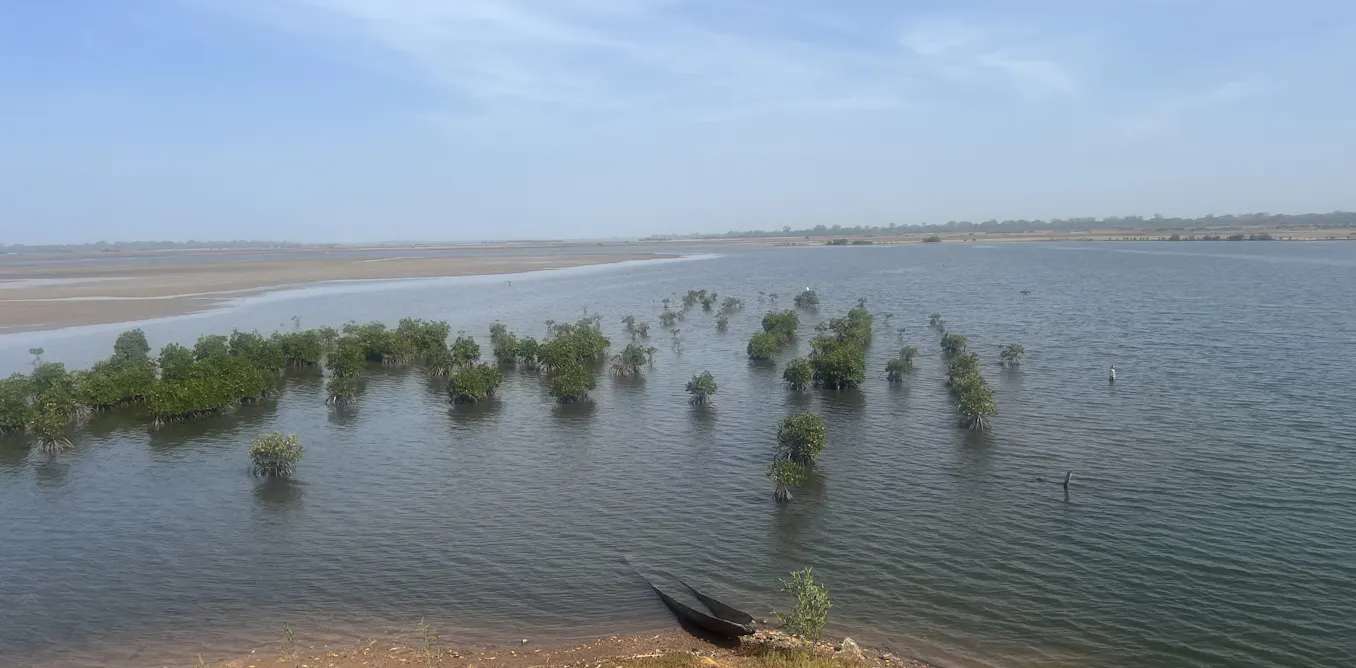
# Senegal's Mangrove Restoration Project Highlights Carbon Accounting Gaps
A major mangrove restoration initiative in Senegal exposed serious flaws in how carbon credits are verified for environmental projects, researchers found. The scheme generated "ghost carbon" credits, which claimed to store carbon that was never actually sequestered or that couldn't be independently verified.
Mangrove forests absorb carbon at rates five times higher than terrestrial forests, making them attractive for climate mitigation programs. The Senegal project, like many nature-based solutions globally, sold carbon credits to fund restoration work. However, weak monitoring systems and loose verification protocols allowed the initiative to claim carbon credits without rigorous proof that the carbon reductions actually occurred.
The problem stems from how these projects measure baseline carbon levels. Monitors must establish what carbon storage would look like if restoration never happened, then measure improvements against that baseline. When baselines are set incorrectly or monitoring occurs infrequently, projects can claim credit for carbon that was already present or that failed to materialize.
This matters because companies and governments increasingly rely on carbon credits from nature-based solutions to offset emissions. If credits don't represent real carbon reductions, climate commitments become hollow. A corporation purchasing a "ghost carbon" credit from the Senegal mangrove project actually funded restoration but received inflated environmental benefits on its ledger.
The Senegal case reflects broader industry gaps. Monitoring protocols vary widely across carbon credit certifiers. Some projects rely on satellite imagery taken months or years apart, creating blind spots where carbon changes go undetected. Others depend on self-reporting by project operators with limited third-party oversight.
Researchers recommend stronger independent auditing, more frequent ground-truthing of carbon measurements, and transparent baseline methodologies. The Nature Conservancy and similar organizations have begun implementing stricter standards, but enforcement remains inconsistent across programs