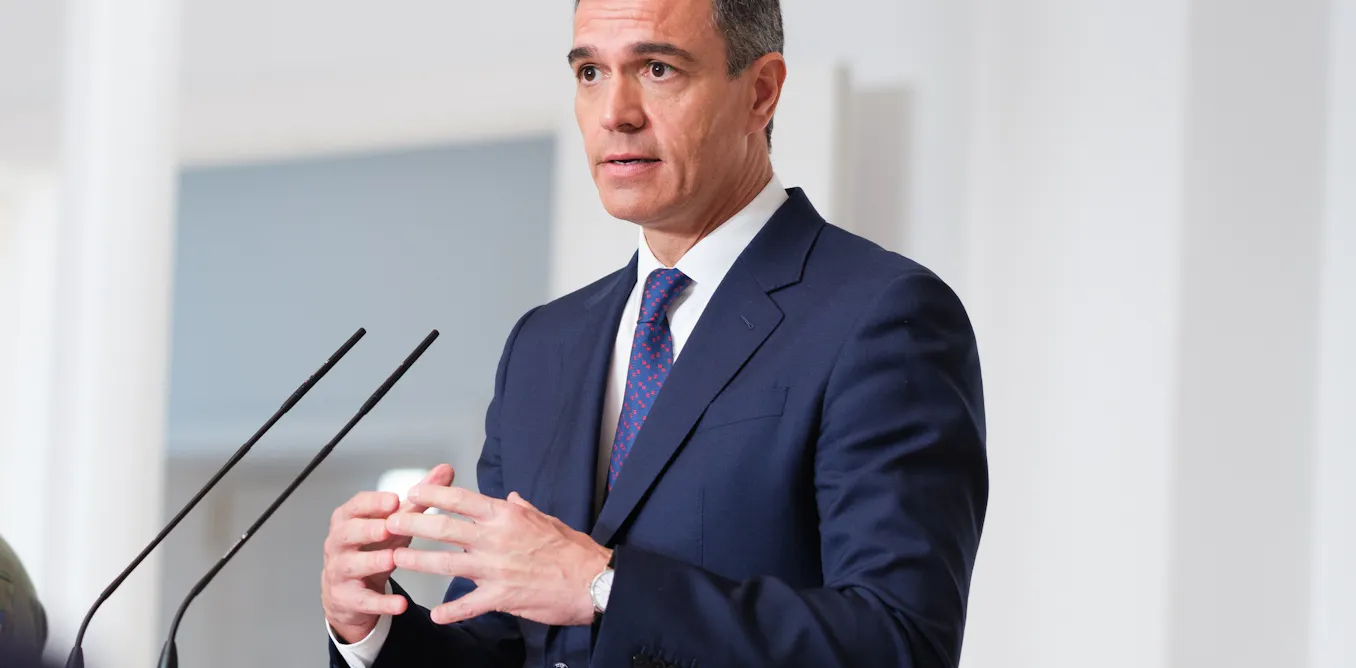
Spain's Socialist Prime Minister Pedro Sánchez faces mounting pressure from corruption allegations targeting his inner circle and family members, potentially destabilizing his coalition government. While no charges have been filed directly against Sánchez, investigations into associates close to him threaten to undermine public confidence in his administration.
The allegations center on Sánchez's wife and advisors, raising questions about governance and transparency at the highest levels of Spanish government. These investigations have created friction within Spain's ruling coalition, particularly with junior coalition partner Sumar, which has grown impatient with the Socialist Party's handling of the scandal.
The political fallout extends beyond mere embarrassment. Coalition partners have signaled that continued corruption allegations could jeopardize legislative cooperation on key government initiatives. Spain's minority government depends on maintaining coalition unity and support from regional parties to pass budgets and legislation. Any erosion of trust threatens the government's ability to govern effectively.
For educators and parents in Spain, government instability carries real consequences. Budget uncertainty, delayed education reform proposals, and prolonged political disputes can disrupt school funding and policy continuity. Teachers' contracts, school infrastructure investments, and curriculum decisions often stall during periods of political turbulence.
The situation reflects broader challenges facing Spanish governance around institutional accountability and public trust. Spanish voters have grown skeptical of political establishment parties following years of high-profile corruption cases. Sánchez's Socialists depend on framing themselves as reformers, making corruption allegations particularly damaging regardless of their ultimate legal outcome.
Whether these allegations result in formal charges remains unclear. However, the reputational damage is immediate and substantial. Coalition partners have begun distancing themselves publicly, and opposition parties have intensified calls for the prime minister's resignation.
The coming months will test whether Spain's government can maintain cohesion under investigative pressure or whether corruption allegations alone will fracture the coalition sufficiently to trigger new elections