A teacher's account reveals the limits of artificial intelligence in classroom feedback and student development. While AI tools can grade assignments quickly and flag errors, they cannot replicate the human connection that drives learning.
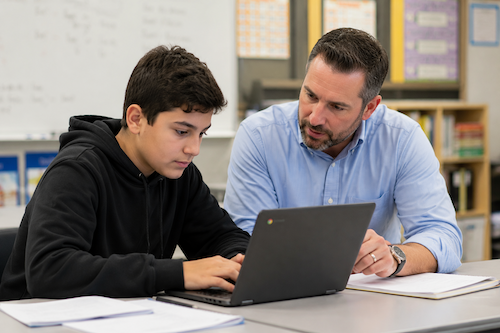
The teacher describes a conference with a student named Steven, who struggled with his final project. During their face-to-face conversation, the educator discovered that Steven's difficulties stemmed not from lack of ability but from uncertainty about the project's relevance to his goals. An AI system would have returned a score and generic suggestions. Instead, the teacher listened, asked questions, and helped Steven see the assignment's value.
This distinction matters. Research on student motivation and engagement consistently shows that personalized feedback from teachers who know their students produces stronger learning outcomes than automated responses. Students perform better when they feel their teachers understand their specific challenges and care about their progress.
Schools increasingly deploy AI tutoring systems and automated grading software to manage workload and scale instruction. These tools have real benefits: they handle routine tasks, flag struggling students, and free teacher time for higher-level work. But the teacher's experience underscores a persistent tension. Delegating feedback to algorithms risks replacing the dialogue that helps students feel seen and challenged.
The stakes extend beyond grades. Adolescents develop identity and confidence partly through trusted adult relationships. When feedback comes from an algorithm, students lose the chance to engage with an adult who believes in their potential and can connect assignments to real growth.
Teachers aren't arguing against technology. They're arguing for its proper role. AI works best as a tool that supports human judgment, not replaces it. A system might flag that a student hasn't submitted work. A teacher then talks with that student, learns what's blocking them, and problem-solves together.
Schools deploying AI for feedback should remain clear-eyed about what automated systems can and cannot do. They excel at scale and consistency. They fail at the human recognition that