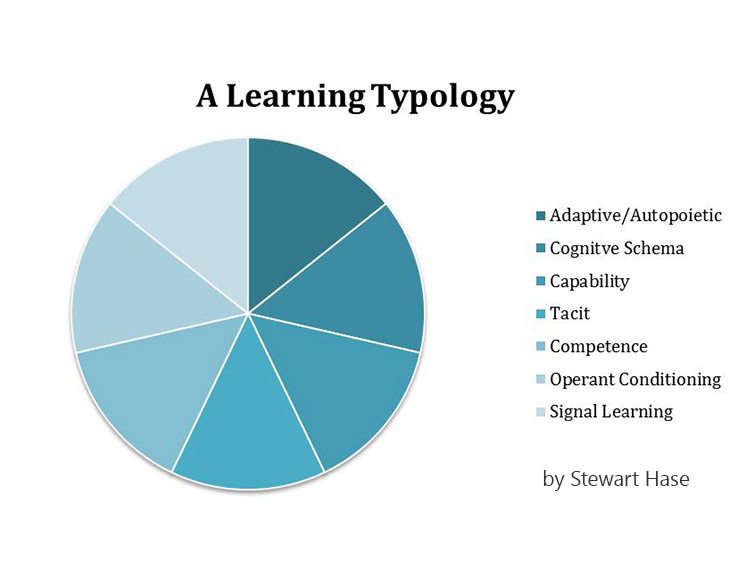
# A Learning Typology: Understanding Seven Paths to Knowledge
TeachThought has released a learning typology that identifies seven distinct ways humans acquire and process understanding. The framework distinguishes itself by operating as a typology rather than a taxonomy, meaning it describes patterns and relationships among learning methods rather than organizing them into rigid hierarchical categories.
The typology recognizes that learners do not fit neatly into single boxes. Instead, students employ multiple approaches simultaneously, blending different pathways depending on subject matter, context, and individual preference. This contrasts with earlier learning models like learning styles, which suggested students learned best through one primary modality.
The seven ways encompass diverse learning pathways. Some learners understand through direct experience and hands-on engagement. Others grasp concepts through logical reasoning and abstract thinking. Social learners acquire knowledge through discussion and collaboration. Reflective learners benefit from time to process and internalize information. Creative learners construct meaning through artistic expression and innovation. Analytical learners break down problems systematically. Intuitive learners recognize patterns and connections without explicit instruction.
The typology framework holds practical classroom implications. Teachers benefit from recognizing that students employ varied understanding pathways rather than assuming a one-size-fits-all instructional approach. This understanding encourages educators to design lessons incorporating multiple entry points and methods of engagement.
The distinction between typology and taxonomy matters for implementation. A taxonomy suggests hierarchy and fixed categorization. A typology acknowledges fluidity and overlap. Students move between different learning pathways, sometimes within a single lesson. A student might approach mathematics analytically while learning history socially and creatively.
This framework aligns with neuroscience research showing that human brains process information through interconnected networks rather than isolated channels. The typology provides educators with language to recognize these patterns in their classrooms while avoiding the trap of labeling students with limiting learning style designations.