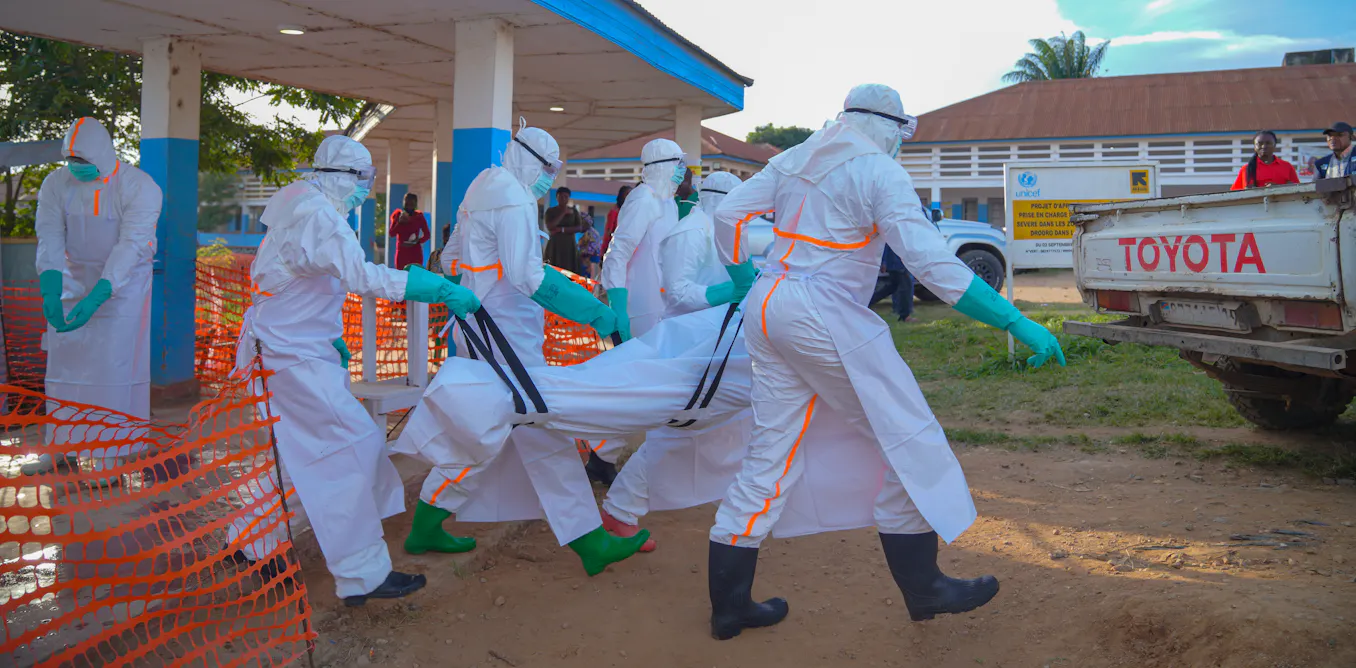
# Three New Ebola Vaccines in Development as Outbreaks Spread
The Democratic Republic of the Congo and Uganda face active Ebola outbreaks without an approved vaccine to contain transmission. New funding now supports development of three experimental vaccines to fill this critical gap.
An infectious disease expert notes that existing vaccines show promise in laboratory settings but lack the regulatory approval needed for widespread deployment. The new funding accelerates clinical trials and production capacity for candidates designed to address current outbreak strains.
Ebola outbreaks cause hemorrhagic fever with fatality rates reaching 50 percent or higher. Rapid vaccine deployment during epidemics can contain spread when combined with isolation and contact tracing. The absence of an approved vaccine forces health authorities to rely solely on containment measures, which prove difficult in regions with limited infrastructure.
The three vaccines under development represent different technological approaches. Some use viral vectors to deliver genetic instructions for immune response. Others employ modified proteins. This diversified strategy increases odds that at least one candidate will prove safe and effective at scale.
Regulatory pathways in Africa and globally will determine how quickly vaccines reach healthcare workers and at-risk populations. Emergency use authorizations can compress approval timelines without sacrificing safety reviews. Previous outbreaks showed that vaccines deployed 6 to 12 months after symptoms emerge still prevent subsequent transmission waves.
Production capacity remains a constraint. Manufacturing facilities capable of producing millions of doses require substantial infrastructure investment. The new funding addresses this bottleneck by supporting facility upgrades alongside clinical development.
Vaccine hesitancy presents an additional challenge in affected regions, where trust in health institutions varies. Communication campaigns must demonstrate safety data transparently and address community concerns directly.
The timing of vaccine availability matters. Outbreaks that spread rapidly can outpace distribution networks. Healthcare workers and high-contact individuals represent priority populations, but vaccines benefit entire communities through reduced transmission chains.