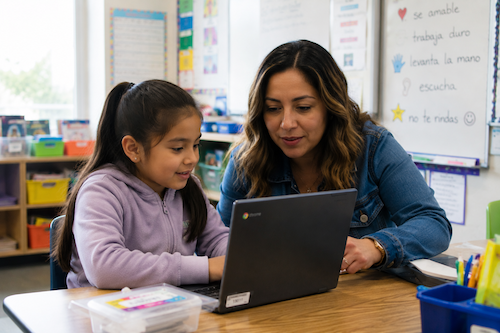
Multilingual students face a fundamental challenge: language serves as both the subject of study and the tool for learning everything else. Schools often treat speaking skills as secondary to reading and writing, leaving gaps in students' ability to communicate, reason, and participate fully in classrooms.
Oracy—the skill and practice of speaking and listening effectively—addresses this gap. When oracy is embedded in teaching, students shift from merely answering questions to engaging in genuine reasoning. They move from passive participation to active contribution, and from silence to genuine voice in their learning communities.
For multilingual learners specifically, oracy instruction offers pathways that written assessments alone cannot capture. Students develop confidence in spoken language through structured discussion, debate, presentation, and collaborative problem-solving. These practices build the oral fluency that supports academic success across subjects.
Research shows that when schools prioritize oracy, students demonstrate stronger comprehension, better retention of content, and increased engagement. Speaking aloud forces students to organize their thinking, clarify their understanding, and receive immediate feedback from peers and teachers. For multilingual students, this creates safe spaces to practice language in authentic contexts rather than isolated grammar drills.
Effective oracy programs include explicit instruction in listening skills, turn-taking, questioning, and responding to others. Teachers model how to construct arguments, ask clarifying questions, and build on others' ideas. These competencies transfer across subjects and persist beyond the classroom.
Many schools still underinvest in oracy, viewing it as taking time away from "academics." This reflects a narrow definition of academic success. Speaking and listening are academic skills. They correlate with improved writing, reading comprehension, and mathematics performance.
For multilingual learners, oracy becomes the bridge. It accelerates language acquisition while simultaneously building the thinking skills schools demand. Schools that embed oracy into regular instruction report that multilingual students who previously appeared disengaged begin contributing substant