# When STEM Lessons Are Too Easy, Students Stop Thinking
Teachers often confuse engagement with learning. Students who stay busy don't necessarily think deeply. New research on STEM instruction reveals that overly simple lessons can actually shut down student reasoning.
The problem emerges in classrooms where activity replaces rigor. A student completing a worksheet or following step-by-step instructions appears engaged. They're on task, working quietly, producing output. But engagement without cognitive demand produces shallow learning.
STEM educators increasingly face pressure to make lessons "fun" and "accessible." This pressure sometimes translates into reducing difficulty rather than scaffolding it properly. When tasks require minimal thinking, students disengage mentally even if they remain physically present.
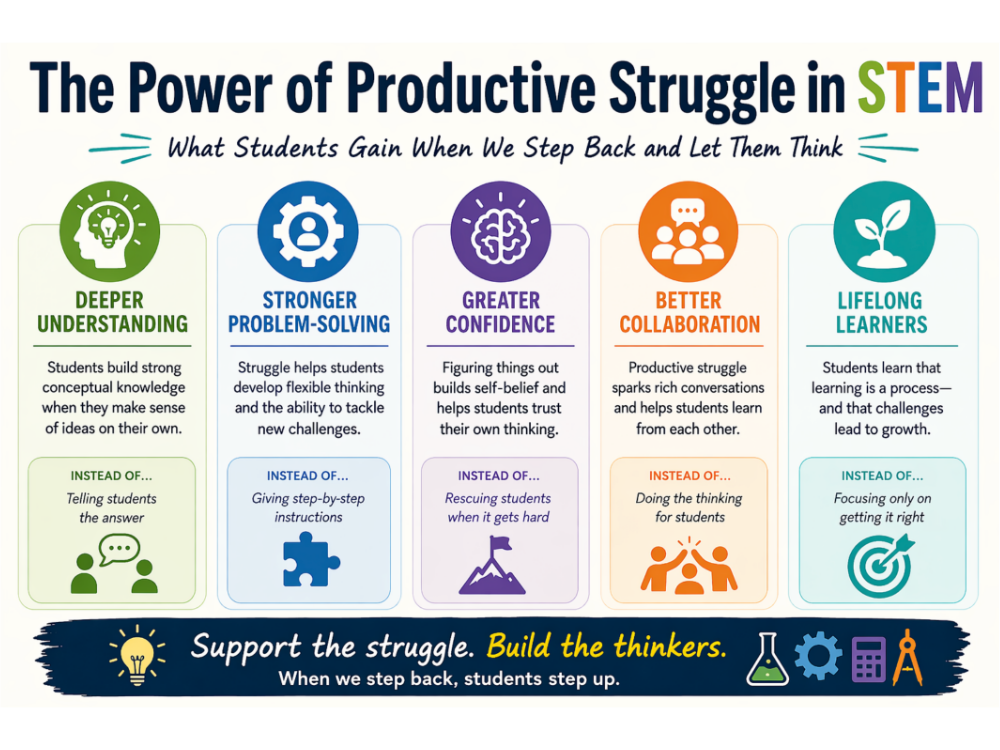
Cognitive science shows that learning requires struggle. When material feels too easy, the brain doesn't form strong neural connections. Students move through activities without wrestling with problems or revising their understanding. They complete assignments but retain little.
Effective STEM instruction balances support with challenge. Teachers need to provide guidance while maintaining intellectual demand. This means asking students questions that push thinking, creating problems with multiple solution paths, and allowing productive failure.
The shift requires rethinking classroom culture. Teachers must distinguish between "on-task" behavior and actual thinking. A student staring blankly at a hard problem may be learning more than one breezily completing easy exercises.
This applies across STEM disciplines. Science labs can become recipe-following rather than genuine investigation. Math problems can test memorization instead of problem-solving. Engineering challenges can reduce to step-by-step instructions.
Schools investing in STEM programs should examine what students actually do during these lessons. Are they thinking or just moving through activities? The answer determines whether STEM time builds deep understanding or simply fills the schedule.