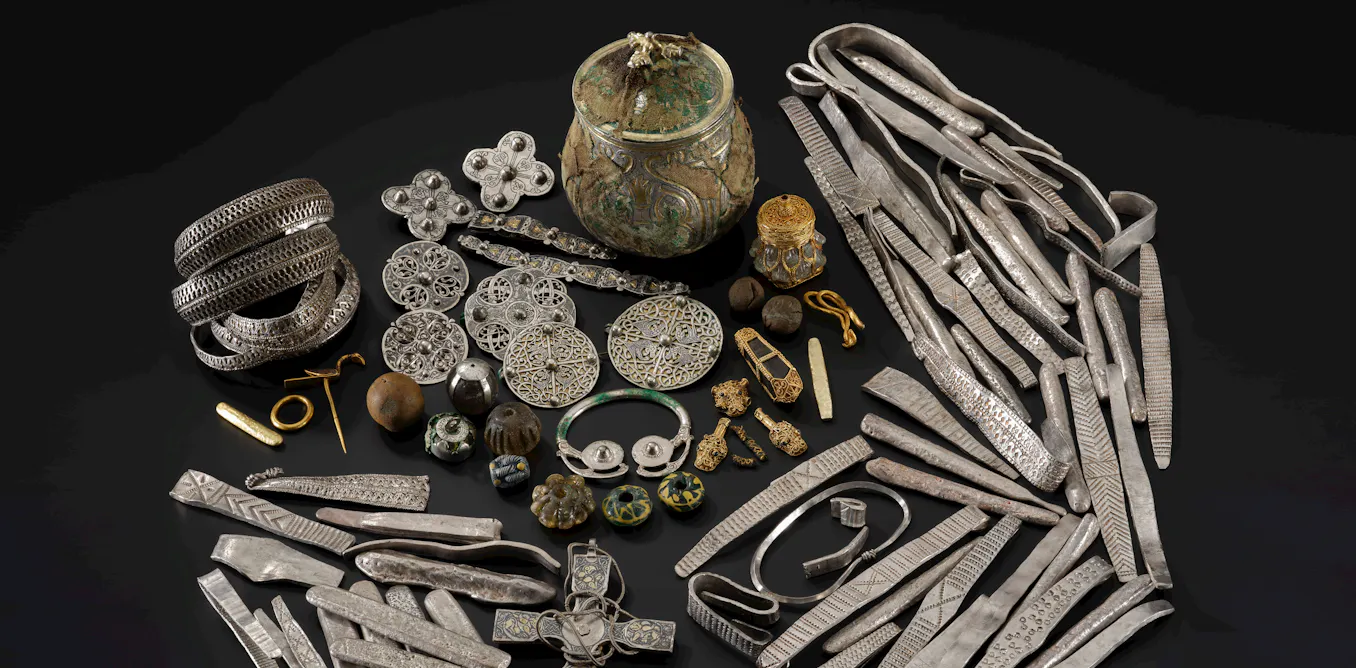
# Viking Hoard Brings Ancient Artifacts to Sydney Museum
An amateur metal detectorist's discovery in Scotland has opened a window into Viking life and commerce. The Galloway Hoard, buried for over 1,000 years, is now on public display at a Sydney museum, offering educators and students rare access to artifacts from the Viking age.
The hoard includes silver coins, jewelry, and metalwork that reveal how Vikings conducted trade and valued precious materials. Metal detecting hobbyists found the collection in Galloway, Scotland, in a location that suggests it belonged to a Viking settler or trader operating in Britain during the 9th or 10th century.
What makes this discovery valuable for education extends beyond the objects themselves. The hoard provides tangible evidence of Viking economic networks, craft techniques, and daily life. Teachers can use the artifacts to demonstrate how archaeologists date finds, analyze material composition, and interpret historical context from physical evidence.
The exhibition in Sydney reaches an international audience far from the hoard's Scottish origins. Museum visitors, including school groups, can examine coins that show trade connections across Europe and Scandinavia. The jewelry and metalwork reveal the skill level of Viking craftspeople and the materials they valued most.
Amateur archaeologists like the metal detectorist who found the Galloway Hoard play an increasingly recognized role in archaeological discovery. Their finds often lead to professional excavation and scholarly analysis. This particular discovery has been studied by experts who can now share their findings with global audiences through museum exhibitions.
For students studying medieval history or archaeology, the Galloway Hoard represents primary source material. Rather than reading about Viking trade routes in textbooks, they can observe the actual coins and goods that traveled those routes. The hoard's contents spark questions about how Vikings accumulated wealth, what they considered valuable, and how they connected with communities across northern Europe.
The exhibition demonstrates how museum collections