# An Updated Guide to Questioning in the Classroom
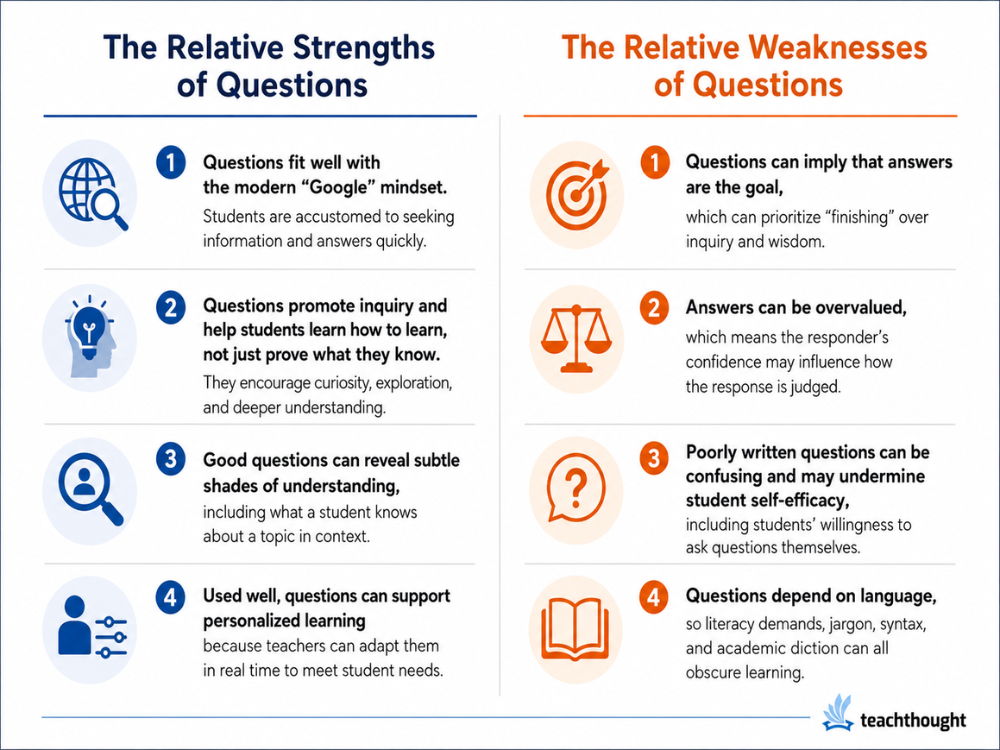
Questions reveal learning gaps, not student weakness. TeachThought's updated guide reframes classroom questioning as a diagnostic tool that teachers and students can use to identify what remains unclear or unexplored.
Traditional classroom culture often treats questions as admissions of failure. Students who ask might worry about appearing unprepared or slow. Teachers who ask may view student questions as interruptions or signs that instruction failed. This guide flips that dynamic entirely.
When students pose questions, they demonstrate metacognitive awareness. They recognize a gap between what they know and what the material requires. That recognition is the first step toward genuine learning. A student asking "Why does photosynthesis require sunlight?" has already thought deeper than one who sits silent.
The guide emphasizes that questioning serves multiple functions beyond knowledge retrieval. Questions can prompt deeper thinking, challenge assumptions, build connections between concepts, and encourage peer discussion. Open-ended questions like "What would happen if we removed that variable?" push learners toward analysis and synthesis rather than simple recall.
For teachers, strategic questioning shapes instruction in real time. Asking students to explain their thinking surfaces misconceptions early. Asking students what confuses them directs lesson pacing and emphasis. This formative use of questions differs sharply from summative assessments that grade right or wrong answers.
The guide also addresses timing and psychological safety. Teachers who welcome questions without penalty create classrooms where confusion becomes discussable rather than shameful. Waiting for student questions before proceeding signals that understanding matters more than pace.
Implementation requires intentional classroom design. Teachers might designate space for questions, model questioning themselves, celebrate questions publicly, and resist the urge to answer immediately. Peer questioning builds accountability while reducing anxiety about teacher judgment.
This approach aligns with research on learning science showing that struggle and error correction deepen memory formation. Questions signal that struggle is