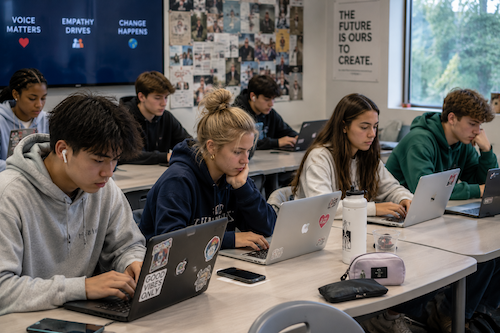
Generation Z students express optimism about artificial intelligence despite widespread concerns about the technology's impact on education and employment, according to new research on Gen Z career aspirations.
The survey examined how young people view AI alongside their college preferences, employer choices, and core career values. While public discourse often emphasizes AI risks, Gen Z respondents demonstrated confidence that the technology will shape their professional futures. This optimism persists even as educators and policymakers debate AI's role in academic integrity, job displacement, and skill development.
The data reveals a generation navigating unprecedented uncertainty. Gen Z entered their formative years during economic disruption, the pandemic, and rapid technological change. Yet their outlook on AI diverges from the cautious narratives dominating adult conversations about automation and workforce transformation.
The survey identified Gen Z's top 100 dream colleges and preferred employers, offering concrete data about where young people aim to study and work. These preferences correlate with how companies and institutions position themselves on AI adoption. Students appear drawn to organizations that frame AI as a tool for augmenting human capability rather than replacing workers.
This optimism does not indicate naivete. Gen Z voters consistently rank economic opportunity and job security among their top concerns. Their confidence in AI suggests they view technological literacy and adaptation as essential survival skills, not optional advantages. Schools and employers that integrate AI literacy into curricula and training programs likely appeal more to this demographic.
The findings matter for educators and institutional leaders. Gen Z's optimism creates both opportunity and responsibility. Universities and employers must deliver on the promise of AI integration by providing genuine skill-building opportunities, not simply deploying AI for efficiency gains. Students expect access to AI tools during their education and training.
This generational perspective also suggests that blanket restrictions on student AI use face practical limits. Gen Z views AI competency as career-essential. Schools that ban tools outright risk teaching students to ignore resources they will encounter and